



If you’ve recently brought home a kitten, you’ve probably discovered one surprising thing they love to bite. Whether it’s your fingers, toes, or ankles, those tiny teeth can be surprisingly sharp. While this behavior can be frustrating, it’s important to understand that kitten biting is completely normal.
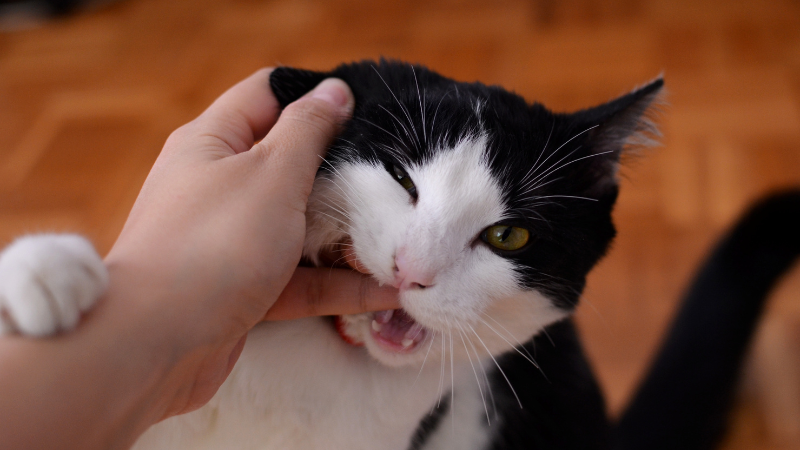
Kittens are natural predators. Even though they live comfortably indoors with food, water, and a cozy bed, their instincts remain the same as their wild ancestors. Chasing, pouncing, and biting are essential parts of how they play, learn, and develop.
The good news is that you don’t need to punish your kitten to stop the biting. Instead, you can guide their natural instincts in healthier ways. Here are six proven tips to help your kitten stop biting people while still enjoying healthy play.
Why Do Kittens Bite?
Before trying to stop the behavior, it helps to understand why kittens bite in the first place.
Cats are born hunters. Their brains are naturally wired to stalk moving objects, chase prey, pounce, and bite. These instincts don’t disappear simply because they live indoors.
Even when all of their physical needs are met, kittens still need mental stimulation. Hunting, chasing, and biting are important psychological behaviors that help them stay happy and confident.
When a kitten doesn’t have appropriate outlets for these instincts, your moving hands and feet often become the next best target.
Instead of trying to eliminate biting completely, the goal is to redirect it toward appropriate toys and activities.
1. Make Toys Move Like Real Prey
One of the biggest reasons kittens bite people is because people are often the only moving objects in the room.
Imagine a kitten resting quietly. Suddenly, your foot walks past. To your kitten, that movement triggers the same hunting instincts they would use in the wild. They crouch, stalk, and pounce.
That’s why interactive play is so important.
Rather than leaving a pile of toys on the floor, actively move toys so your kitten can chase, stalk, and catch them. Wand toys, feather toys, strings (used safely under supervision), and moving toys encourage natural hunting behavior.
Play with your kitten several times a day, especially from around four weeks of age when their coordination and vision improve enough for active hunting games.
The more your kitten learns that toys are the proper target, the less likely they are to attack your hands and feet.
2. Never Use Your Hands as Toys
It may seem adorable to wiggle your fingers in front of a kitten or let them wrestle with your hands, but this teaches an important lesson and it’s the wrong one.
If your hands become part of the game, your kitten learns that human skin is something they’re allowed to chase and bite.
While those tiny teeth might not hurt much today, the habit becomes much less enjoyable as your kitten grows into an adult cat.
Instead of encouraging hand play, always use an actual toy between you and your kitten. This helps them understand that toys, not people, are appropriate hunting targets.
Building this habit early can prevent biting problems later in life.
3. Redirect Biting Instead of Punishing
When your kitten bites you, avoid yelling, scolding, or hitting them.
They aren’t being naughty they’re simply following their natural instincts.
Instead, calmly stop moving your hand, gently remove it, and immediately offer a toy they can bite instead.
Think of it this way:
Don’t simply say “No.”
Say, “Yes but bite this instead.”
Different kittens enjoy different types of toys. Some prefer soft kicker toys they can grab and bunny-kick with their back legs. Others enjoy noisy crinkle toys or feather wands that fly through the air like birds.
Experiment with different toy styles until you discover what your kitten enjoys most.
The key is consistently redirecting every bite toward an appropriate object.
4. Let Your Kitten Catch the Toy
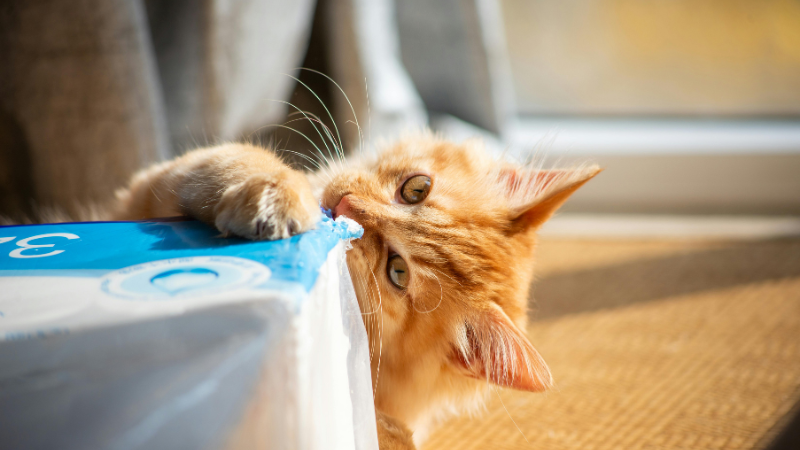
Many owners unknowingly make playtime frustrating by constantly pulling toys away.
Cats don’t just enjoy chasing they need the satisfaction of catching their prey.
During play sessions, let your kitten occasionally grab the toy, wrestle with it, bite it, and bunny-kick it. This completes the hunting sequence and leaves them feeling mentally satisfied.
Laser pointers deserve special mention.
While they can provide exercise, they should never be the only toy your kitten plays with because there’s nothing they can actually catch.
If you use a laser pointer, always finish the game by directing the laser onto a physical toy your kitten can capture and bite.
This helps prevent frustration and makes playtime much more rewarding.
5. Follow a Healthy Hunter’s Routine
Cats naturally follow a simple daily rhythm:
Hunt → Catch → Bite → Eat → Groom → Sleep
You can recreate this pattern at home to help your kitten feel more relaxed and fulfilled.
Start with an energetic play session that allows your kitten to chase and catch toys.
Once they’re tired, offer a meal or a small treat. Eating after successful play mimics the reward of a successful hunt.
After eating, most kittens naturally groom themselves and settle down for a nap.
Following this routine consistently can reduce excess energy, improve behavior, and make biting less frequent throughout the day.
6. Consider Raising Two Kittens Together
If possible, adopting two kittens instead of one can make a huge difference.
Kittens learn valuable social skills from each other.
They wrestle, chase, bite, and play together, which helps them burn energy in healthy ways. They also teach each other bite inhibition. If one kitten bites too hard, the other quickly lets them know, helping both kittens learn appropriate boundaries.
A playmate gives your kitten someone to practice natural behaviors with, reducing the likelihood that they’ll use you as their favorite chew toy.
While adopting two kittens isn’t possible for every family, it can be an excellent solution for highly energetic kittens.
Top-Rated and Award-Recognized Pet Care
Professional Cat Sitting Services
Secure and Reliable Cat Boarding Services
Common Mistakes to Avoid
Even with good intentions, some habits can accidentally encourage biting.
Avoid these common mistakes:
- Playing directly with your hands or feet.
- Punishing or yelling at your kitten after a bite.
- Expecting your kitten to stop biting without providing interactive play.
- Teasing your kitten by never allowing them to catch their toy.
- Relying only on laser pointers without giving them something physical to catch afterward.
- Skipping daily play sessions.
Small changes in your routine can make a significant difference over time.
When Will My Kitten Stop Biting?
Most kittens naturally become less mouthy as they mature, especially if they’re consistently taught appropriate play habits.
The biggest improvement usually comes when they receive:
- Daily interactive play.
- Plenty of mental stimulation.
- Appropriate chew and hunting toys.
- Consistent redirection whenever they bite.
- Regular routines that include play followed by meals.
Patience is important. Biting is part of normal kitten development, but with the right guidance, your kitten will learn better ways to express their natural instincts.