

The 3-3-3 Rule for Cats is a widely recognized framework used by shelters and behaviorists to help owners understand the typical timeline for a newly adopted cat to adjust to its new home. It breaks down the transition into three critical milestones: 3 days to decompress, 3 weeks to learn routines, and 3 months to feel fully at home.

Below is a comprehensive guide you can use for your blog, structured to be both user-friendly and optimized for clarity.
The 3-3-3 Rule
Bringing home a new cat is an exciting milestone, but for your new feline friend, it can be a period of significant stress. The 3-3-3 Rule is a roadmap that helps you set realistic expectations and provide the right support during the first three days, three weeks, and three months of adoption.
Phase 1: The First 3 Days
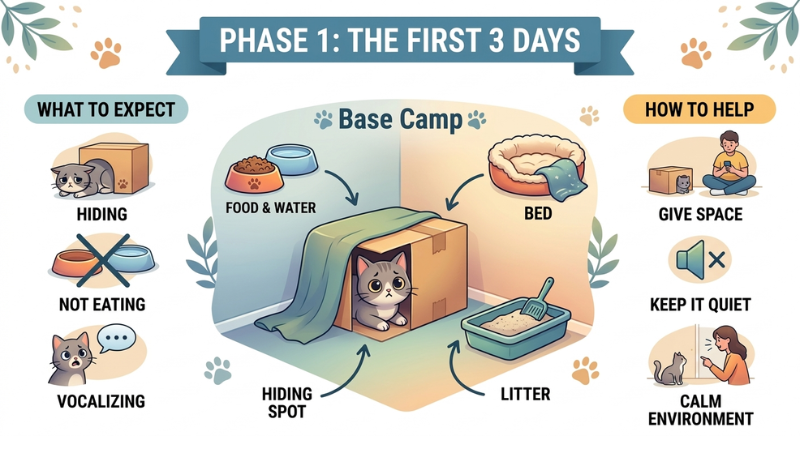
The first 72 hours are the most overwhelming. Your cat has just left everything familiar, the smells, sounds, and people of the shelter or previous home, and arrived in a completely alien environment.
- What to Expect: Many cats go into “survival mode.” They may hide in small spaces, refuse to eat or drink, or avoid the litter box. You might see signs of high stress, such as flattened ears or excessive vocalization.
- How to Help:
- Create a “Base Camp”: Confine them to one small, quiet room (like a spare bedroom) with all essentials: food, water, litter box, and a cozy hiding spot.
- Give Them Space: Do not force interaction. Sit quietly in the room without looking directly at them to help them get used to your presence.
- Quiet Environment: Minimize loud noises and visitors during these first few days.
Phase 2: The First 3 Weeks
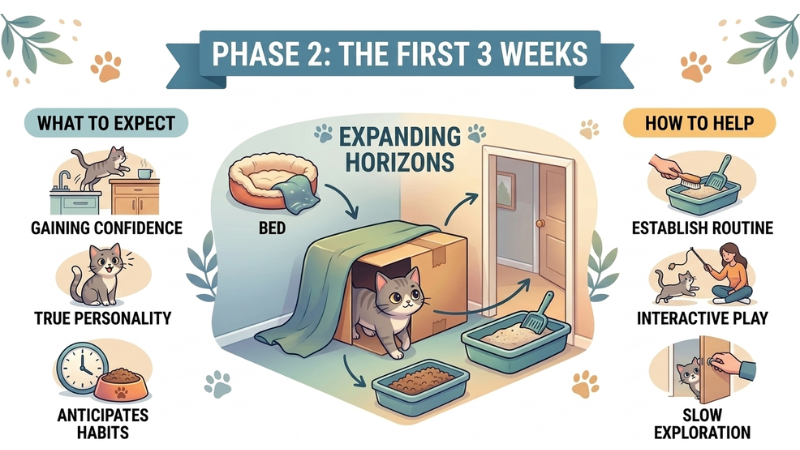
After about three weeks, the initial “shock” wears off. Your cat realizes they are safe and begins to explore their immediate surroundings.
- What to Expect: Your cat will start showing more of their true personality. They may begin testing boundaries like jumping on counters or scratching furniture as they gain confidence. This is also the phase where they start to anticipate your daily habits.
- How to Help:
- Establish a Routine: Be consistent with feeding, play, and litter box cleaning times. Predictability is the fastest way to build security for a cat.
- Interactive Play: Use wand toys to engage their natural hunting instincts. This builds a positive bond between you without being physically overwhelming.
- Slow Exploration: If they seem confident, you can gradually allow them access to other parts of the house, but always keep their “safe room” accessible as a retreat.
Phase 3: The First 3 Months
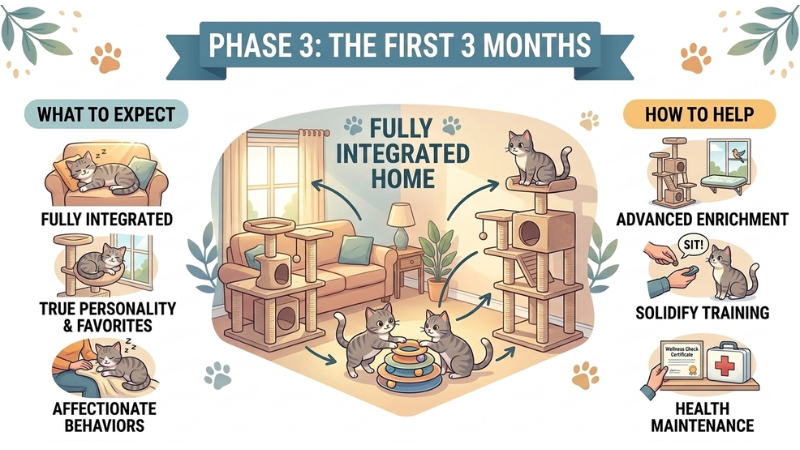
By the three-month mark, most cats have fully integrated into the household. They no longer feel like “guests” but like true members of the family.
- What to Expect: You will likely see their complete personality. They should have established favorite sleeping spots, established bonds with family members, and feel comfortable enough to relax in open spaces.Affectionate behaviors, like purring and kneading, become more frequent.
- How to Help:
- Advanced Enrichment: Introduce more complex stimulation, such as tall cat trees, window perches, or puzzle feeders, to keep them mentally sharp.
- Solidify Training: This is a great time to reinforce positive behaviors or even try clicker training for simple commands like “sit” or responding to their name.
- Health Maintenance: Ensure they have had their initial wellness check with a veterinarian to establish a long-term care plan.
Why the 3-3-3 Rule Matters
Understanding this timeline prevents common “adopter’s remorse” or the feeling that a cat isn’t a good match. Every cat is unique. Kittens may adjust in a “2-2-2” timeframe, while senior or rescue cats with a history of trauma might need a “4-4-4” approach or even longer.
The 3-3-3 rule is not a set of strict deadlines, but a reminder that patience is the ultimate love language for a new pet. By respecting their pace, you lay the foundation for a lifetime of trust and companionship.
How Pawland Supports Your Cat’s 3-3-3 Journey
- Continuous Care with Live-In Pet Sitting: During the first few days (Phase 1), your cat is in “survival mode” and needs a calm, familiar environment. If you need to be away, our Live-In Pet Sitting ensures a professional stays in your home 24/7. This prevents the extra stress of moving your cat to a boarding facility, allowing them to decompress in their own “Base Camp.”
- Consistency through Pet Drop-In Visit: As your cat enters Phase 2 and starts learning routines, consistency is key. Our Pet Drop-In Visit service helps maintain a strict schedule for feeding, litter box cleaning, and interactive play. This reliability builds the confidence your cat needs to start exploring their new home.
- Expert Pet Sitters for Every Phase: Whether it’s the initial 3 days or the full 3 months, our Pet Sitters are trained to read feline body language and respect your cat’s pace. We focus on gentle engagement and positive reinforcement to help your feline friend feel like a true member of the family.