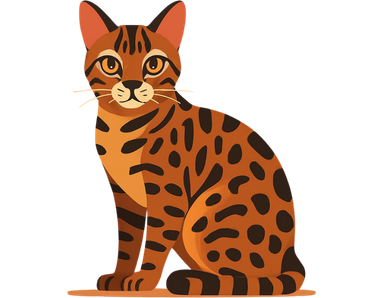


The modern Bengal cat breed was pioneered in the 1960s and 1970s, most notably by American breeder Jean Mill. Her goal was to create a domestic cat that retained the exotic allure of the Asian Leopard Cat (Prionailurus bengalensis) but possessed the sweet, gentle temperament of a house cat.
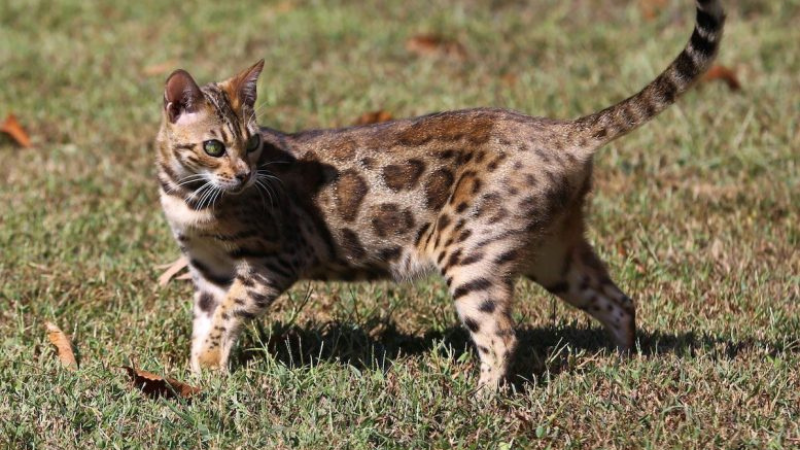
By crossing these wild ancestors with domestic breeds like the Abyssinian, Egyptian Mau, and American Shorthair, breeders eventually stabilized the line. Today, for a Bengal to be considered a truly domestic pet and recognized by major registries like TICA (The International Cat Association), they must be at least four generations (F4) removed from their wild ancestor.
1. The “Shadow” Factor: They Are Not Independent
Forget the stereotype of the aloof cat that ignores you all day. Bengals are incredibly needy and social. If you are looking for a cat that roams the house quietly while you’re gone for 10 hours, this is not the breed for you.
- The Constant Companion: Most Bengals follow their humans everywhere. From the moment they arrive, they demand to be in the middle of the action
- sleeping in laps, sitting on keyboards, and supervising every move.
- The “Buddy” System: Because they are so social, it is often advised to house them in pairs so they don’t get lonely. If you have a high-energy dog, they often become fast friends. Having a “sibling” or a constant human presence is vital, as a bored Bengal quickly becomes a destructive Bengal.
2. High-Octane Energy & Intelligence
Bengals are essentially dogs in cat form. They require intense physical and mental stimulation that goes far beyond a simple feather wand.
- Trainability: You can train them just like a dog. Many owners successfully leash-train their Bengals to explore the outdoors safely. They can learn to fetch, sit, and even perform complex tricks.
- “Maniac Mode”: While experts suggest 15 minutes of play a few times a day, a Bengal kitten can stay in “Maniac Mode” for five hours straight. They are total menaces when they have pent-up energy and will find their own (often destructive) ways to burn it off.
- The “Blood Sacrifice”: Be prepared for some scratches. Bengals play hard, think “flying squirrel attacks.” Especially during the teething phase, they may prefer a hand or foot over a toy. Redirection to appropriate scratchers and toys is key, but patience is mandatory.
3. “No” Is Just a Suggestion
Bengals are not just curious, they are determined. They possess a level of persistence that can be both impressive and exhausting for an owner.
- Persistence: If a Bengal wants to be on the kitchen counter, they will jump back up 50 times no matter how many times they are moved.
- Outsmarting the System: Standard cat-proofing rarely works. If you put aluminum foil on the counters to scare them, they might just play with it. If you hide treats on a high closet shelf, they will literally scale the shelving units to perform a heist. You need infinite patience to live with a Bengal.
4. The “Part Fish” Phenomenon
Keep your toilet lids down! Most cats hate water, but Bengals are obsessed with it. This is a trait inherited directly from their wild ancestors, who hunted in rivers.
- Water Spies: A Bengal might start by dipping paws in a water glass, but they quickly graduate to jumping into the bathtub or even the toilet.
- Kitchen “Helpers”: They will watch a sink drain for 20 minutes like it’s a blockbuster movie and insist on “helping” you wash dishes or even observing the shower from inside the curtain. If you hate wet paw prints on your furniture, reconsider this breed.
5. Stupidly Brave and Very Loud
Bengals generally show zero fear. A Bengal kitten won’t hesitate to walk right up to a large dog to initiate play. While this bravery is charming, it is also dangerous, they require constant supervision because they lack the “stranger danger” or fire-awareness of other breeds.
- The Vocalist: They will tell you exactly how they feel. Bengals are incredibly talkative. They chirp, trill, and “yell” if they are denied entry to a room or put in a carrier. If you value absolute peace and quiet, Bengal will definitely disrupt it.
Stunning Physical Characteristics
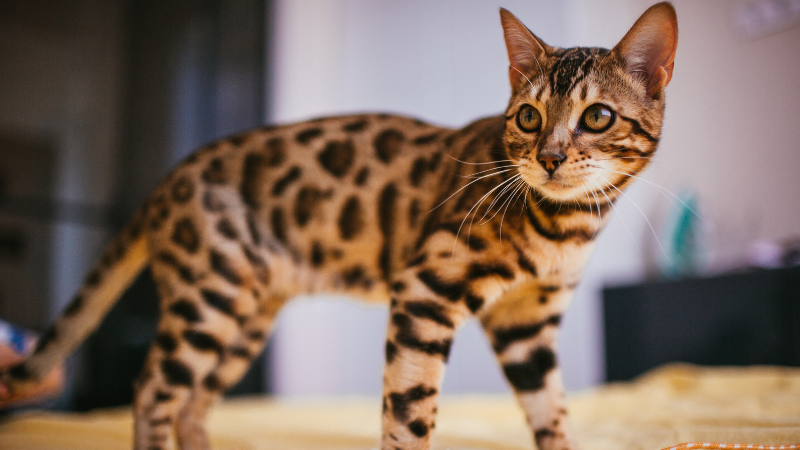
Despite the chaos, their beauty is undeniable.
- The Coat: Their short, silky fur features either rosette spots (like a leopard) or marbled patterns (swirls of color).
- The “Glitter”: Many Bengals possess a unique “glitter gene” that gives their fur an iridescent shimmer, especially visible in bright sunlight.
- Color Palette: While brown is the most common, they also come in silver and snow (resembling a miniature snow leopard).
Essential Care and Environment
Living with a Bengal is an active lifestyle choice.
- Vertical Space: Bengals love to climb. It is essential to provide cat trees (ideally floor-to-ceiling), wall-mounted shelves, or high perches.
- Exercise Wheels: Many owners find success with cat exercise wheels to help burn off their near-limitless energy indoors.
- Safety: Because of their high prey drive and lack of fear, they should ideally be kept indoors or in a secure catio (outdoor enclosure).
Health and Longevity
Bengals generally live between 12 and 16 years. While robust, the breed is genetically predisposed to a few conditions:
- Hypertrophic Cardiomyopathy (HCM): A heart condition involving the thickening of the heart muscle.
- Progressive Retinal Atrophy (PRA): A genetic condition that can lead to vision loss.
- Anaesthetic Sensitivity: Always discuss this with your vet before any surgery, as they can be more sensitive to certain medications than other breeds.
Trusted Care for High-Energy Bengal Cats
Bengal cats and local Bangla cats are naturally energetic, social, and attention-seeking, so leaving them alone isn’t ideal. They need proper care, interaction, and a safe environment to stay happy while you’re away.
Pawland provides trusted cat boarding services and professional cat sitting services designed to keep your cat comfortable and engaged. Our boarding offers a secure, stimulating space with plenty of playtime and care, while our in-home sitting ensures your cat enjoys familiar surroundings with regular visits, feeding, and interaction.
Every cat is different, especially high-energy breeds like Bengals. That’s why our services are tailored to match your cat’s personality, routine, and activity level.
With Pawland, your cat gets more than basic care, they receive attention, comfort, and a stress-free experience every time.
Is Bengal Right for You?
Bengals are patient, high-tolerance, and endlessly entertaining. They match the energy of an active household and often bond deeply with other pets.
However, they are a massive commitment. You have to cat-proof your life, your counters, and your patience. But if you want a tiny, spotted best friend who will follow you into the shower and keep you laughing with their antics, a Bengal is worth every “menace” moment.
Where to Buy a Bengal Cat in the UAE
- Specialized Pet Boutiques: Shops like Pet Mania and Petholicks in Dubai, or Furs & Feathers Pets in Abu Dhabi, are well-known for offering vaccinated, microchipped, and certified purebred Bengal kittens.
- Online Classifieds: Platforms like Dubizzle and OpenSooq feature listings from local breeders and private sellers. Prices typically range from AED 3,000 to AED 10,000, depending on the cat’s pedigree and coat rarity.
- Verification is Key: Before purchasing, always insist on seeing the Pet Passport and a Pedigree Certificate confirming the cat is at least an F4 or F5 generation to ensure it is legal to own under UAE law.