
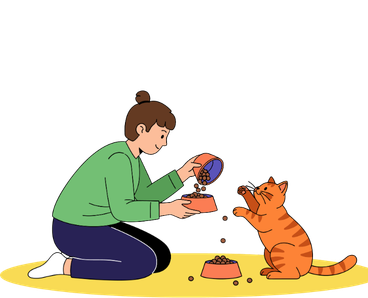


Feeding your cat seems simple, but it is one of the most critical aspects of pet ownership. Poor nutrition leads directly to health issues like obesity, diabetes, and kidney disease. This comprehensive guide details exact biological feeding schedules, precise caloric requirements, and professional strategies to optimize your cat’s long-term health.
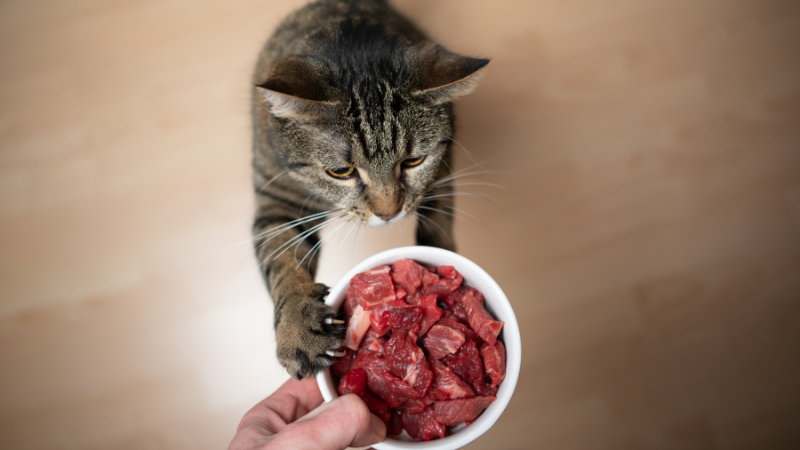
1. Feeding Schedules by Life Stage
A cat’s nutritional needs change drastically as they age. Their digestive capacities, metabolic speeds, and growth rates dictate how many times a day they need to eat.
Kittens (Weaning to 6 Months)
- Frequency: 3 to 4 meals per day.
- The Biology: Kittens experience intense growth spurts. They require up to three times the energy of an adult cat per pound of body weight. However, their stomachs are tiny roughly the size of a walnut at 8 weeks. Feeding large, infrequent meals stretches their stomachs, causes vomiting, and leads to nutrient malabsorption. Spacing meals out every 4 to 6 hours ensures a steady stream of amino acids and glucose to support skeletal and muscular development.
Adolescent Cats (6 Months to 12 Months)
- Frequency: 2 to 3 meals per day.
- The Biology: Around six months of age, a cat’s growth curve begins to plateau. Their metabolism slows down, especially if they are spayed or neutered during this window. You can transition them down to three meals, and eventually two meals, by late adolescence. This prevents the rapid fat accumulation that often follows sterilization.
Adult Cats (1 Year to 10 Years)
- Frequency: 2 meals per day.
- The Biology: Modern veterinary medicine recommends a strict 12-hour feeding interval for adult domestic cats. A cat’s stomach takes about 6 to 8 hours to empty completely after a meal. Allowing the digestive system to rest between meals helps regulate insulin levels and prevents chronic inflammation of the gastrointestinal tract.
Senior Cats (11+ Years)
- Frequency: 2 to 3 meals per day (adjusted for health status).
- The Biology: Senior cats undergo metabolic shifts. Some suffer from decreased nutrient absorption and muscle wasting, requiring highly digestible, frequent meals. Others face decreased mobility, making them prone to obesity if overfed. If your senior cat develops chronic kidney disease (CKD) or hyperthyroidism, they may require smaller, more frequent meals to manage nausea and maintain blood sugar stability.
2. Calculating the Exact Amount of Food
Never rely solely on the generic feeding charts printed on the back of cat food packaging. Those guidelines are calculated using broad averages and frequently overestimate the portions your specific indoor cat needs, leading to accidental overeating.
The Baseline Math: Caloric Density
To find out exactly how much to feed your cat, you must first calculate their Resting Energy Requirement (RER). This is the baseline number of calories your cat needs to perform essential functions like breathing, digestion, and heart function while at rest.
The standard veterinary formula for RER is:
\(\text{RER}=70\times (\text{Body\ Weight\ in\ kg})^{0.75}\)
For a simpler approximation, an average, indoor, neutered adult cat requires roughly 20 to 25 calories (kcal) per pound of their ideal target weight.
Daily Calorie Targets by Weight
If your cat is overweight, you must calculate calories based on their target weight, not their current weight. Feeding an obese 15-pound cat for a 15-pound weight target will keep them obese.
Current Weight | Ideal Weight Profile | Target Daily Calories (Approx.) |
5 lbs (2.3 kg) | Small-framed adult or lean adolescent | 110 – 130 kcal |
8 lbs (3.6 kg) | Average lean adult cat | 160 – 180 kcal |
10 lbs (4.5 kg) | Standard domestic adult cat | 200 – 220 kcal |
12 lbs (5.4 kg) | Large-framed breed (e.g., Maine Coon mix) | 240 – 260 kcal |
15 lbs (6.8 kg) | Overweight standard cat (needs reduction) | 210 – 230 kcal (for weight loss) |
3. Wet Food vs. Dry Food: The Ultimate Breakdown
Felines are obligate carnivores. Their bodies are optimized to process animal proteins and fats, not plant-based carbohydrates. The type of food you put in their bowl fundamentally alters their cellular health and organ function.
| Wet Food | Dry Food |
|---|---|
| 70–80% Moisture | 6–10% Moisture |
| High in Protein & Fat | Higher in Carbohydrates |
| Supports Hydration & Kidney Health | Long Shelf Life |
| Highly Palatable for Most Cats | Convenient to Store & Serve |
Wet Food (Canned, Pouches)
- The Pros: High moisture content (typically 70% to 80% water). Cats have a low biological thirst drive because their wild ancestors obtained moisture directly from prey. Wet food protects the kidneys, flushes the bladder, and prevents urinary crystals. It is low in carbohydrates and rich in animal protein.
- The Cons: Expensive, spoils within 4 hours if left uncovered, and does not provide any mechanical scraping for teeth.
Dry Food (Kibble)
- The Pros: Highly economical, shelf-stable, convenient, and allows for the use of automated feeders and puzzle toys.
- The Cons: Extremely low moisture content (6% to 10%). It relies heavily on starches and carbohydrates (like corn, wheat, or peas) to hold the kibble shape. High-carb diets can trigger insulin resistance and obesity in cats.
The Gold Standard: The Hybrid Diet
Most veterinarians recommend a combination feeding method. Provide a high-quality wet food meal in the morning and evening to guarantee proper hydration. Supplement this with a precisely measured snack of dry kibble inside a puzzle toy during the day to satisfy their natural urge to forage.
4. Selecting Your Management Strategy
How you deliver food is just as important as what you feed. There are three primary strategies used by pet owners today.
1. Free Feeding (Ad Libitum)
- How it works: Keeping a bowl permanently filled with dry kibble so the cat can eat whenever they want.
- The Verdict: Highly discouraged. Free feeding ignores a cat’s natural hunting cycle. It leads to boredom eating, suppresses their physical drive to play, and makes it impossible to notice immediate changes in appetite, which is often the first warning sign of severe illness.
2. Portion-Controlled Feeding
- How it works: You measure out exact weights of food and serve them at fixed times every day.
- The Verdict: The healthiest option. This allows you to monitor exactly how many calories your cat consumes. It establishes you as the provider of resources, strengthening the human-animal bond. It also simplifies medicating your cat if they ever fall ill.
3. Automated Meal Management
- How it works: Utilizing electronic microchip or timed feeders to dispense precise food weights.
- The Verdict: Excellent for busy lifestyles. High-tech options like the Whisker Feeder-Robot manage serving sizes down to the gram, preventing early morning begging behavior and keeping multi-cat homes organized.
Maintaining Routines While You Are Away
Cats love predictability. Sudden changes to their environment or shifting their daily meal schedules can trigger stress, behavioral issues, and digestive problems. When you travel, maintaining a flawless, natural feeding routine is absolutely critical.
- In-Home Routine Care: Utilizing dedicated cat sitting services ensures your cat stays right in their familiar home environment. Certified, background-checked professional sitters drop in to handle on-time feeds, replenish fresh water, manage portion control, and clear litter boxes exactly when your cat expects it.
- Cage-Free Boarding Environments: If your cat requires closer supervision, cat boarding services offer a customized solution. Your cat stays inside the comfort of a qualified sitter’s home completely cage-free, ensuring they receive personalized care and 24/7 attention without the stress of loud commercial kennels.
5. Recognizing Overweight and Underweight Cats
Scale numbers do not tell the whole story. Body frames vary wildly between a dainty Siamese and a massive Norwegian Forest Cat. Veterinarians use the Body Condition Score (BCS) system, a 1-to-9 scale based on visual and physical assessments.
Checking Your Cat’s Body Condition Score:
- The Rib Test: Place both hands on your cat’s ribcage. You should be able to feel individual ribs easily under a thin layer of fat, similar to feeling the knuckles on the back of your hand. If they feel like your palm, the cat is overweight. If they feel like your knuckles when making a tight fist, the cat is underweight.
- The Overhead View: Look down at your cat from above. You should see a clear, inward indentation right behind their ribs, creating a distinct waistline. A straight line or an outward bulge indicates excess fat.
- The Profile View: Look at your cat from the side. The belly should tuck upward behind the ribcage. A large, swinging low belly that swings side-to-side often indicates excess fat (though do not confuse this with the primordial pouch, which is a loose flap of skin present even on healthy cats).
Practical Steps for Transitioning Your Cat
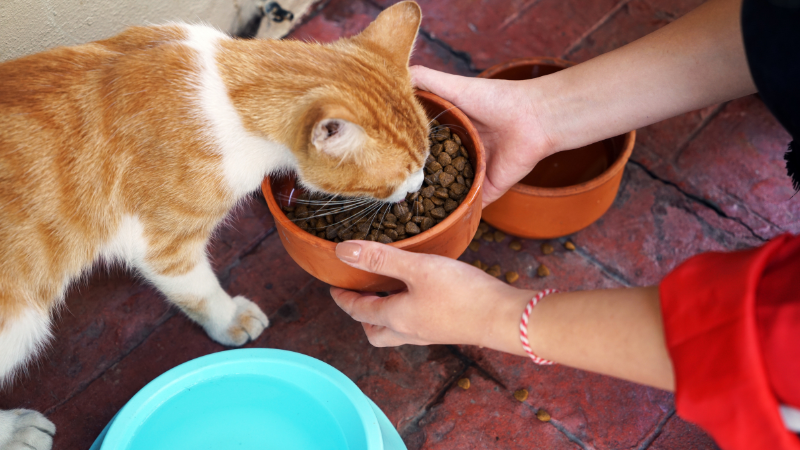
Cats are creatures of habit and can be highly resistant to changes in their diet. If you alter their food or schedule too quickly, you risk causing gastrointestinal distress or behavioral issues.
Transitioning from Free Feeding to Scheduled Meals
If your cat is used to an all-day buffet, switching overnight to two closed meals can cause intense anxiety, vocalization, and destructive behavior. Use a phased approach:
- Days 1–3: Leave the dry food bowl out, but only at specific times. Put it down for 45 minutes in the morning, 45 minutes at midday, and 45 minutes at night. Remove the bowl when the time is up.
- Days 4–7: Eliminate the midday window. Measure the exact daily caloric allocation and divide it equally between the morning and evening windows.
- Day 8 onward: Keep the morning and evening times completely fixed, ensuring they are spaced roughly 12 hours apart.
Transitioning from Dry Food to Wet Food
A rapid shift to wet food can disrupt a cat’s gut microbiome, causing diarrhea or vomiting. Use a week-long mixing protocol to avoid issues:
- [Days 1-2]: 75% Old Dry + 25% New Wet
- [Days 3-4]: 50% Old Dry + 50% New Wet
- [Days 5-6]: 25% Old Dry + 75% New Wet
- [Day 7+]: 100% New Wet Food Diet
7. Troubleshooting Feline Feeding Problems
Even with the best planning, behavioral and physiological issues can disrupt your cat’s feeding schedule.
The “Scarfe and Barf” Phenomenon
Some cats eat their food so fast that their stomach lining reacts, causing them to regurgitate their entire unchewed meal immediately after eating.
- The Fix: Ditch standard bowls. Use flat plates to spread out wet food, or utilize devices like Catit Senses Puzzle Feeders. These force your cat to use their paws to extract individual pieces of kibble, slowing down their eating speed and providing excellent mental enrichment.
Multi-Cat Food Stealing
In multi-cat households, dominant cats often bully submissive cats away from their bowls, leading to one obese cat and one malnourished cat.
- The Fix: Feed your cats in entirely separate rooms with the doors closed. If that is unfeasible, invest in microchip-activated automatic feeders. These smart bowls only open their lids when they detect the unique embedded microchip or collar tag of the assigned cat.
Sudden Loss of Appetite
If an adult cat refuses to eat for more than 24 to 48 hours, they are at extreme risk for Hepatic Lipidosis (fatty liver disease). This is a life-threatening medical emergency where the liver becomes overwhelmed trying to process body fat for energy.
- The Action: Never try to force a cat to fast through a picky phase. If your cat refuses food for more than two consecutive meals, contact your veterinarian immediately to check for underlying medical conditions like dental pain, pancreatitis, or kidney infections.