
Who Takes Care of Your Cat During Boarding?
During cat boarding, your cat is primarily cared for by a trained cat sitter. These professionals are responsible for ensuring your cat’s well-being, maintaining a strict routine, and addressing any potential health concerns.
Who is a Cat Sitter?
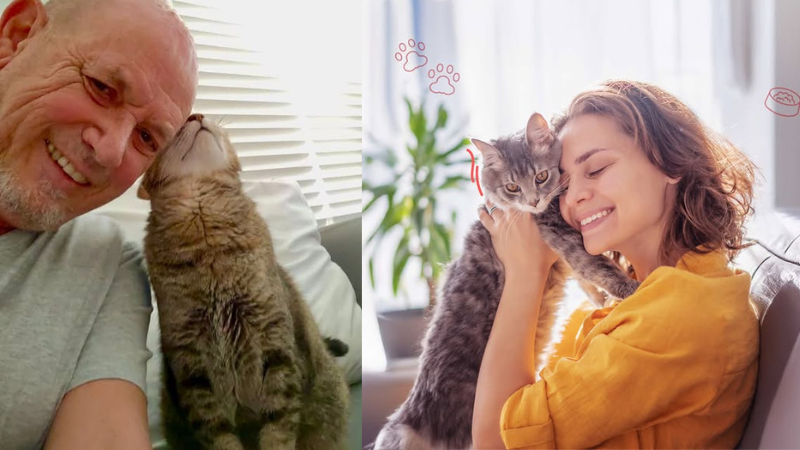
A cat sitter is a trusted individual who provides care for a cat in its own home while the owner is away, handling feeding, fresh water, litter box cleaning, playtime, medication, and general well-being, ensuring the cat stays in a familiar environment with minimal stress.
What Happens During Cat Boarding
During cat boarding, your feline gets temporary lodging with routine feeding, fresh water, litter box cleaning, and staff monitoring, plus enrichment like toys and climbing structures, all while requiring up-to-date vaccinations for a safe, supervised stay. The process involves check-in to discuss needs, followed by care in a separate enclosure
Information Shared and How It’s Used
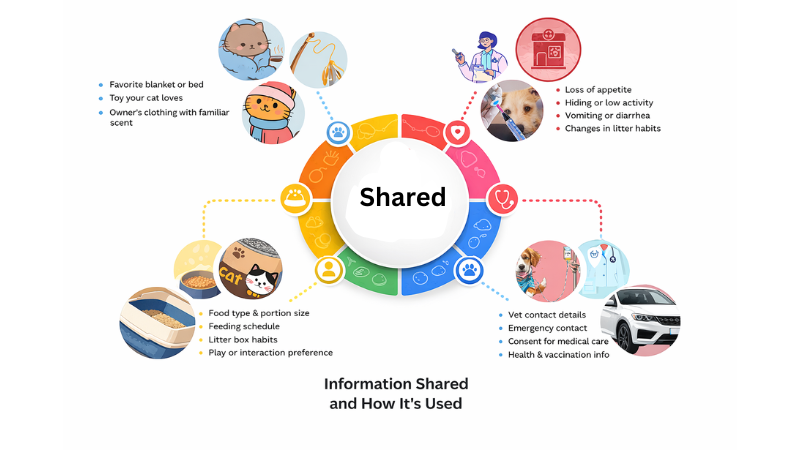
Familiar Items: Owners are encouraged to bring items like a favorite blanket, toy, or piece of clothing with their scent. The facility uses these to create a sense of home and security, which helps the cat adjust to the new environment and reduce anxiety.
Routine: Owners provide detailed information on daily habits, including feeding schedules, types of food and portions, and litter box use, as well as their preferred interaction styles (e.g., quiet companionship vs. interactive play). Staff follow these instructions closely to maintain consistency, which is crucial for a cat’s well-being, as they are creatures of habit and thrive on predictability.
Monitoring: Facilities require owners to provide their veterinarian’s contact information, an emergency contact, and written consent for emergency medical care. Staff use this information to:
- Track health: Staff monitors the cat’s eating, drinking, and litter box habits daily, noting any abnormalities.
- Identify issues: Trained staff know how to spot subtle signs of stress, illness, or injury, such as hiding behavior or changes in appetite.
- Respond to emergencies: In an emergency, the facility contacts the owner or a designated proxy and seeks veterinary advice immediately, using the provided information to make informed decisions about the cat’s health.
How Cat Boarding Works
The process starts with check-in to share medical history, diet, and personality, then transitions to a stay with regular care, enrichment, and updates for the owner.
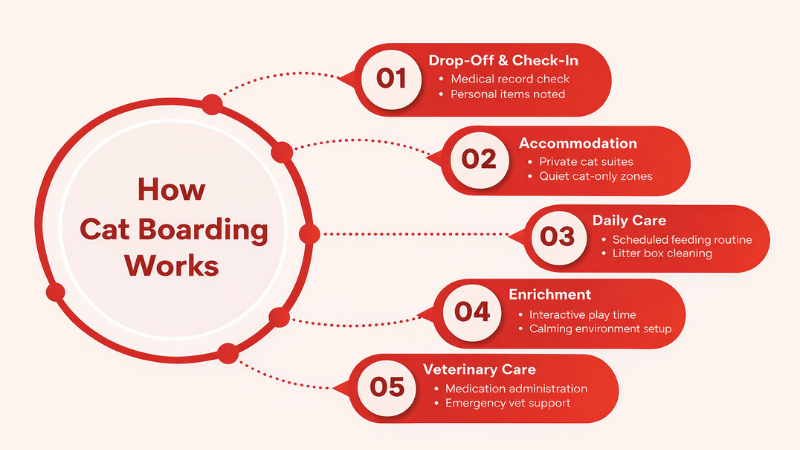
- Drop-Off & Check-In
The process begins with a formal intake assessment to review medical records, verify up-to-date vaccinations (typically Rabies and FVRCP), and discuss your cat’s specific dietary or behavioral needs. Staff often document personal items like blankets or favorite toys to ensure they are returned after the stay.
- Accommodation
Modern “cat hotels” move away from traditional cages, offering individual suites with multi-level vertical space for climbing and perching. Key features include independent ventilation to control odors and separate “cat-only” zones designed to keep feline guests isolated from the noise and scent of boarding dogs.
- Daily Care
Care centers maintain a structured routine that includes feeding on your cat’s home schedule, fresh water changes, and litter box scooping at least twice daily. Staff monitor appetite and bathroom habits daily to track well-being, often providing updates to owners via photo report cards or live webcams.
- Enrichment
To prevent stress and boredom, facilities provide mental and physical stimulation such as puzzle feeders, wand toy play, and window perches for “cat TV”. Many also use calming pheromones and soft music to create a soothing environment.
- Veterinary Care
Reputable facilities have protocols for administering medications and monitoring chronic conditions. In the event of an emergency, centers follow pre-authorized medical instructions and typically have a partnership with a local 24/7 veterinary clinic for immediate treatment.
How Long Can Cats Stay in Boarding?
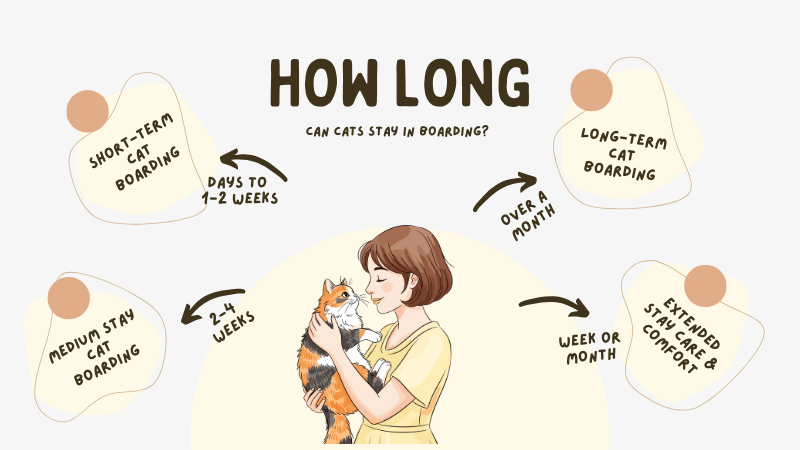
Cats can typically stay in boarding for a few days to several weeks, with shorter trips (1-2 weeks) being common for holidays and longer stays (3+ weeks) possible if the facility offers excellent care with enrichment, but longer periods depend heavily on the cat’s health, personality, and the quality of the facility.
1. Short-Term Cat Boarding
Short-term cat boarding provides temporary, safe lodging for felines, ranging from basic catteries to luxury hotels with play areas, specialized care, and 24/7 monitoring, with options like in-home cat sitting or a dedicated cat sitter like Pawland offering various services for short breaks, ensuring needs like feeding, hygiene, and comfort are met.
2. Long-Term Cat Boarding
Long-term cat boarding provides a secure, structured environment with professional care for owners away for extended periods, featuring routines, playtime, and health monitoring, but it can be stressful due to unfamiliar surroundings. Choosing in-home cat boarding is crucial for a cat’s well-being, as it provides a dedicated cat sitter to ensure a stress-free stay.
3. Extended Stay Care & Comfort
Extended stay care & comfort” typically refers to extended stay hotels (also known as apartment hotels or serviced residences), which are lodging options designed for longer periods (weeks or months) and provide a homier experience than standard hotels.
Types of Cat Boarding
Cat boarding options range from basic utilitarian spaces to high-end resorts. Choosing the right one depends on your cat’s medical needs, personality, and social preferences.
1. Traditional Boarding (Kennels/Catteries)
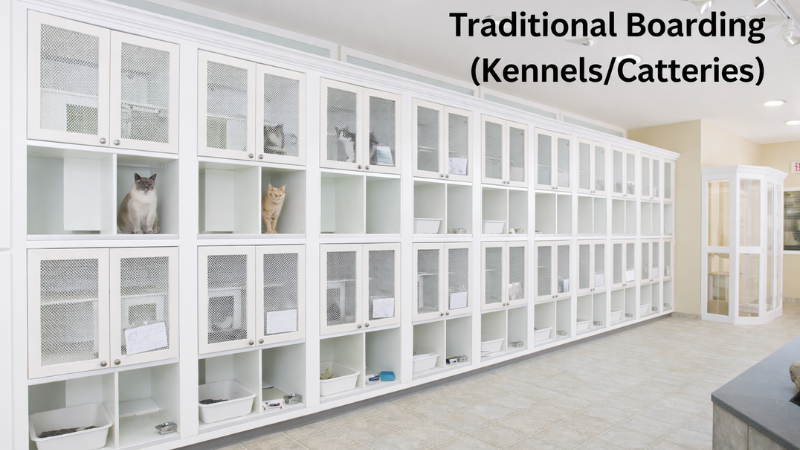
These are purpose-built facilities designed for temporary stays.
- Accommodations: Typically consist of individual enclosures or “condos” with tiered platforms for climbing.
- Environment: Some offer “chalet-style” units with both an indoor sleeping cabin and a safely enclosed outdoor run for fresh air.
Catatories
A cattery is a specialized facility designed for the temporary housing, care, or breeding of cats. While primarily used for boarding while owners are away, some catteries also function as breeding centers or rescue facilities.
Purpose of a Cattery
A cattery serves two main purposes: providing a safe, professional boarding environment for cats when owners are away, and breeding and raising specific cat breeds with a focus on health, welfare, and genetics. These facilities are designed to offer security, comfort, and proper care tailored specifically to cats, whether for short-term stays or structured breeding programs.
Kennels
The term kennel refers to any structure or business designed to house, shelter, or breed animals, most commonly dogs, though the term sometimes includes facilities for cats as well.
Purpose of a kennel
The purpose of a kennel is to provide a safe, enclosed space for a dog, serving as a personal retreat, den, or temporary containment for training, travel, or when owners are away, preventing destructive behavior and offering security from elements or hazards. Kennels help with house training, managing separation anxiety, supervising play, and protecting dogs from danger while ensuring they have a comfortable, designated spot.
2. Luxury Cat Hotels/Resorts

Luxury cat hotels offer premium boarding with private suites, stimulating play areas (such as climbing walls and TVs), spa treatments, attentive care from experienced staff, and 24/7 veterinary access, aiming to provide a stress-free, enriching vacation for your cat.
3. Veterinary Cat Boarding
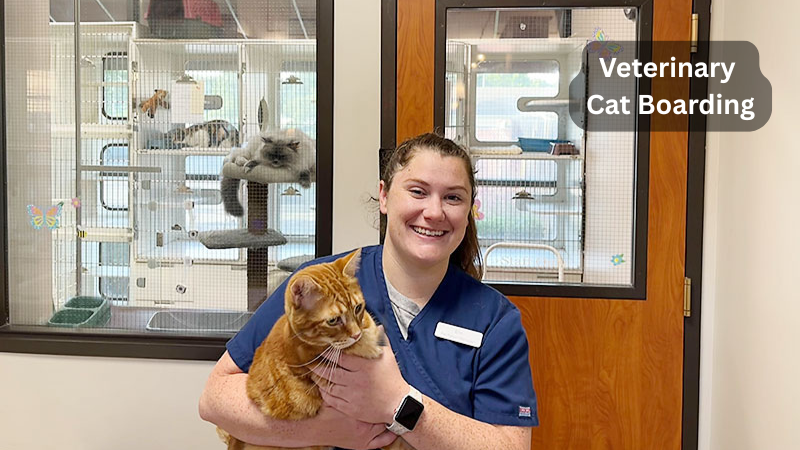
Veterinary cat boarding provides a safe, monitored stay for cats, offering medical oversight, medication administration, and a calm environment, ideal for cats with health needs or owners seeking peace of mind, with key requirements including up-to-date vaccinations (rabies, distemper), familiar items (food, blanket), and booking ahead, especially during holidays, for a stress-free experience with trained staff.
4. In-Home Cat Boarding
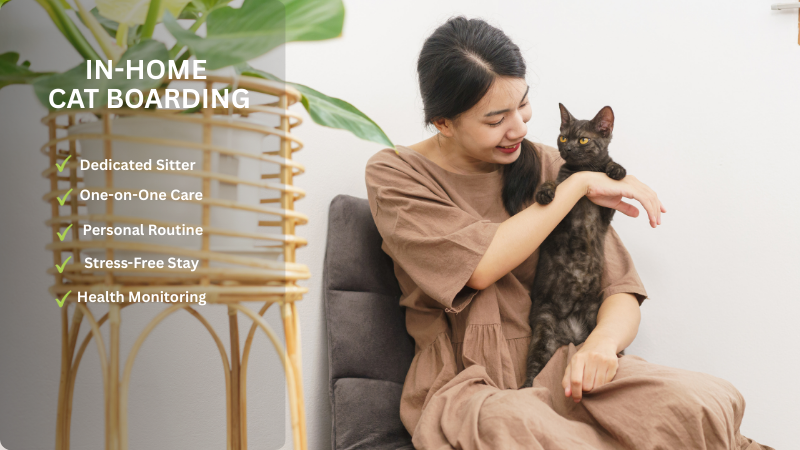
In-home cat boarding means hiring a dedicated sitter to care for your cat in your own home, providing familiar surroundings, maintaining routines, and reducing stress compared to traditional boarding facilities, where cats go to a different location. A sitter visits daily (or stays overnight) to feed, clean litter, play, and give personalized attention, keeping your cat happy in its own territory with fewer disruptions like strange smells or sounds.
What In-Home Cat Sitters Do
In-home cat sitters provide essential care in the cat’s familiar environment, covering feeding, fresh water, litter box cleaning, playtime, cuddles, and medication administration, while also offering home security by collecting mail, watering plants, and making the house look lived-in.
They ensure routines are maintained, reducing stress for the cat, and send updates to owners, offering peace of mind. Services range from daily drop-in visits to overnight stays, with sitters adapting to the cat’s specific personality and needs.
Why Most Pet Owners Choose In-Home Boarding in the UAE
People choose in-home cat boarding in the UAE primarily to reduce stress for their cats, who thrive in familiar surroundings, by providing personalized care, maintaining routines, and avoiding exposure to other animals and unfamiliar catteries. This method offers a safer, less overwhelming environment with dedicated attention to their specific needs (diet, play, medication), ensuring comfort and well-being while owners are away.
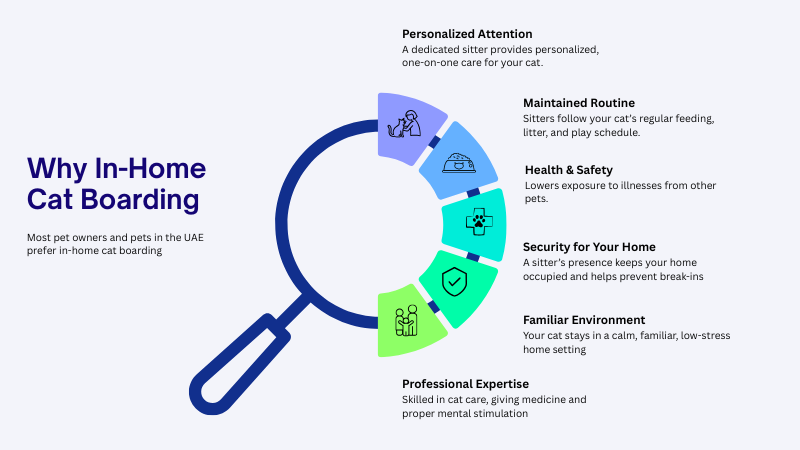
Reduced Stress & Anxiety: Cats are territorial, staying in their own home or a sitter’s home minimizes sensory overload from new places, smells, and other pets.
- Personalized Attention: A dedicated sitter provides one-on-one care, following your cat’s unique feeding, playtime, and affection needs.
- Maintained Routine: Sitters stick to established schedules for feeding, litter cleaning, and play, which is crucial for feline comfort.
- Health & Safety: Eliminates the risk of contracting illnesses from other animals, common in busy boarding facilities.
- Security for Your Home: A sitter’s presence makes your home look occupied, deterring potential break-ins.
- Familiar Environment: Whether it’s their own home or a sitter’s, the environment is more familiar and less stimulating than a traditional cattery.
- Professional Expertise: Reputable sitters are trained in cat behavior, can administer medicine, and provide proper stimulation.
Benefits for Your Cat
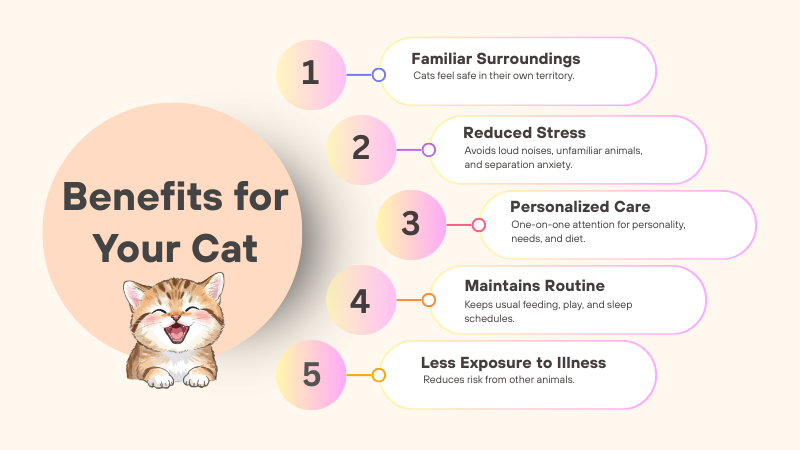
- Familiar Surroundings: Cats feel safest in their own territory, surrounded by familiar smells, sounds, and sights, which lowers anxiety.
- Reduced Stress: They avoid the loud noises, unfamiliar animals, and stress of a cattery or hotel environment, preventing separation anxiety.
- Personalized Care: Sitters provide one-on-one attention, catering to your cat’s unique personality, needs, and diet.
- Maintains Routine: Sticking to their usual feeding, playing, and sleeping schedules keeps them happy and healthy.
- Less Exposure to Illness: Reduces the risk of catching illnesses or parasites from other animals.
- Mental & Physical Health: Playtime and engagement keep them stimulated, while regular care ensures physical needs are met.
Benefits for The Owner
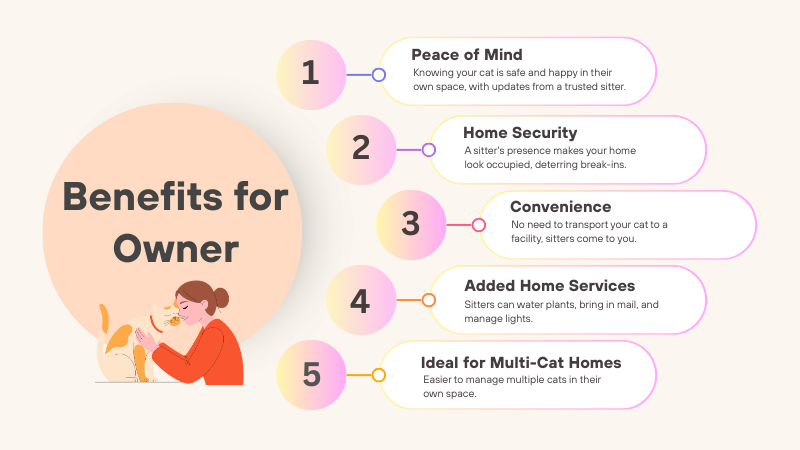
- Peace of Mind: Knowing your cat is safe and happy in their own space, with updates from a trusted sitter.
- Home Security: A sitter’s presence makes your home look occupied, deterring break-ins.
- Convenience: No need to transport your cat to a facility, sitters come to you.
- Added Home Services: Sitters can water plants, bring in mail, and manage lights.
- Ideal for Multi-Cat Homes: Easier to manage multiple cats in their own space.
Types of In-Home Cat Boarding Services
1. In-Home Boarding (at Sitter’s Home)
In-home boarding means your pet stays at a trusted sitter’s home instead of a kennel or cage-based facility. This option offers a calm, home-like environment where pets receive personal attention, regular walks, playtime, and affection just like they would at home.
Pets are usually hosted in a safe, pet-friendly house and cared for by trained sitters who follow your pet’s routine, feeding schedule, and special needs. In-home boarding is ideal for pets who feel anxious in crowded boarding facilities or need extra love and supervision.
The key difference is location: boarding is out-of-home, and house sitting is in-home, with house sitters often handling more home tasks like mail and plants alongside pet care.
1. What it is:
- Home Environment: Pets stay in a calm, home-like setting rather than cages or noisy boarding facilities.
- Personalized Care: Feeding schedules, walks, playtime, and medications are tailored to your pet’s routine.
- Individual Attention: Sitters care for a limited number of pets, ensuring focused, one-on-one attention.
2. Key Benefits
- Reduced Stress: A quieter space and personal care help minimize anxiety, ideal for cats, senior pets, and nervous animals.
- Variety of Services: Includes feeding, walking, playtime, basic grooming, updates, and special care if needed.
- Flexibility: Perfect for short trips, long holidays, or last-minute bookings, with flexible drop-off and pick-up options.
2. Drop-in Visits
Drop-in visits are scheduled, short-duration (often 30-60 min) visits by a sitter to a home to provide essential care like feeding, potty breaks, play, and medication for pets, offering a convenient alternative to boarding while keeping pets in their familiar environment, with tasks varying by the owner’s request.
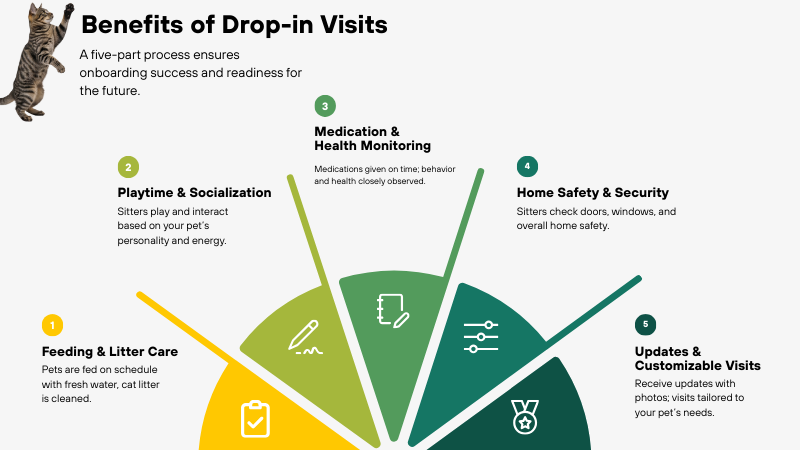
- Feeding & Water
Your pet will be fed according to their specific diet and schedule. Sitters also make sure fresh water is always available, keeping pets hydrated and healthy.
- Litter Box Care (for Cats)
Cats’ litter boxes are cleaned and refreshed during each visit, maintaining hygiene and preventing odors in your home.
- Playtime & Socialization
Sitters spend time playing, cuddling, and interacting with your pet to keep them active and emotionally happy. Activities are tailored to each pet’s energy level and personality.
- Medication Administration
If your pet requires medication or supplements, sitters can give them on time and as instructed, reducing the risk of missed doses.
- Health Monitoring
Sitters observe your pet for any changes in behavior, appetite, or physical condition. Any concerns are immediately reported to you, helping catch issues early.
- Home Security & Safety Checks
While caring for your pets, sitters also keep your home safe by checking doors, windows, and other security measures, giving you peace of mind while you’re away.
- Customizable Visits
Visits can be short (15–30 minutes) or longer (up to 1 hour), depending on your pet’s needs. You can schedule multiple visits per day, for example, morning feeding, midday playtime, and evening check-in.
- Updates & Communication
Sitters provide regular updates, photos, or videos of your pet so you can see they’re happy, safe, and well-cared-for even when you’re away.
3. Overnight Stays
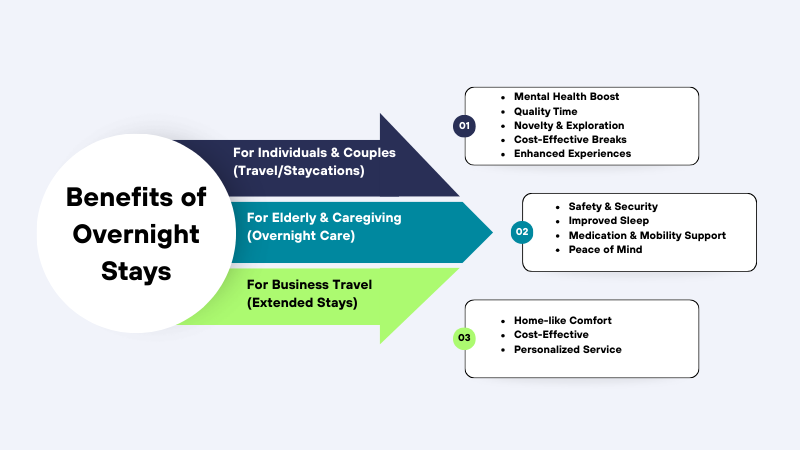
Overnight stays provide your pet with round-the-clock care and companionship while you’re away. Unlike short drop-in visits, an overnight stay means a trained pet sitter stays in your home, or at their home if offering in-home boarding, ensuring your pet never feels lonely or anxious. This service is perfect for pets who need extra attention, have health concerns, or simply prefer the comfort of familiar surroundings.
4. Live-In Sitter
A Live-In Sitter provides continuous, full-time care by staying in your home for the duration of your absence. Unlike drop-in visits or overnight stays, the sitter is present 24/7, offering companionship, supervision, and personalized care for your pets.
- At Your Home (House Sitting)
A house sitter is someone who agrees to live in another person’s home, usually without paying rent, in exchange for performing agreed-upon responsibilities. These responsibilities can vary, but often include pet care, watering plants, and ensuring the property remains
- At Their Home (In-Home Boarding)
“At Their Home” (In-Home Boarding) means a pet stays overnight in a caregiver’s home, offering a cozy, less stressful alternative to kennels with more one-on-one attention, consistent routines, and personalized care, ideal for anxious or senior pets, but requires careful selection of insured, experienced caregivers to ensure safety and proper handling.
5. Daily Visits
Daily visits are short, scheduled visits by a professional pet sitter to your home while you’re away. Unlike occasional drop-in visits, daily visits provide consistent care every day, ensuring your pet’s routine is maintained and their needs are met.
Benefits of Live-In Sitting
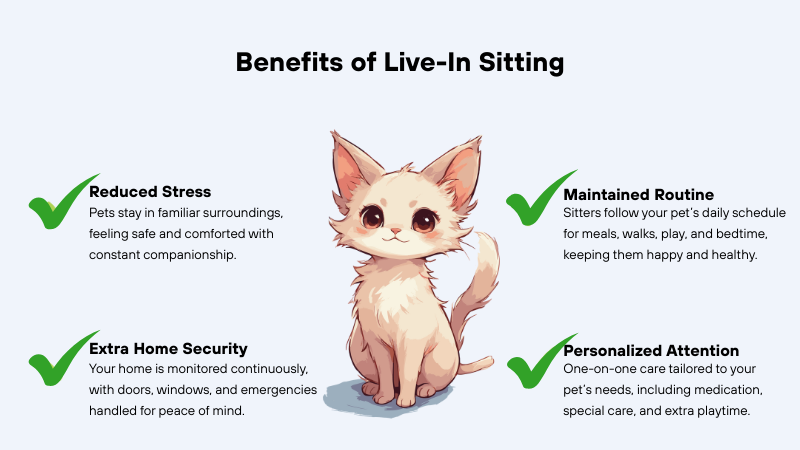
A Live-In Sitter stays in your home for the duration of your absence, providing round-the-clock care and supervision for your pets. This service offers multiple advantages for both pets and pet owners:
- Reduced Stress
Pets remain in their familiar environment, reducing anxiety and stress caused by separation or new surroundings. Continuous companionship ensures they feel safe and comforted.
- Maintained Routine
Live-in sitters follow your pet’s normal daily schedule, including meals, walks, playtime, and bedtime routines. This consistency helps pets stay happy and healthy while you’re away.
- Extra Home Security
With a sitter living in your home, your property is continuously monitored. They ensure doors and windows are secure, handle emergencies, and provide peace of mind while you’re away.
- Personalized Attention
Pets receive one-on-one care tailored to their personality, needs, and preferences. Sitters can provide medication, special care, or extra playtime, making sure your pets get the attention they deserve.
Responsibilities
Professional pet sitters handle a wide range of tasks to ensure your pet is safe, happy, and healthy while you’re away. Key responsibilities include:
- Feeding & Water
Sitters provide meals and fresh water according to your pet’s schedule and dietary requirements, ensuring they stay nourished and hydrated.
- Litter Box Maintenance
For cats, litter boxes are cleaned and refreshed regularly. For dogs, outdoor potty breaks are taken care of to maintain hygiene and comfort.
- Companionship
Sitters spend quality time playing, cuddling, and interacting with your pets to keep them mentally stimulated and emotionally happy.
- Health & Safety
Sitters monitor your pet for signs of illness or distress, administer medications if needed, and ensure your home is secure. Any concerns are promptly communicated to the pet owner.
Home Boarding (Sitter’s Home)
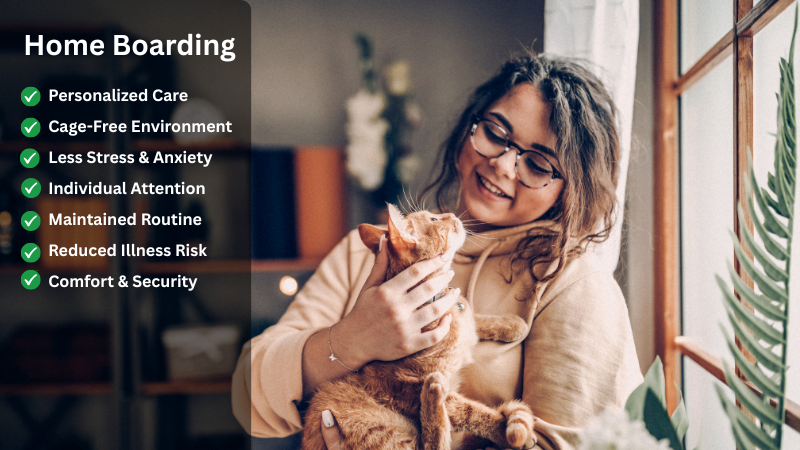
Home Boarding (Sitter’s Home) means a pet stays overnight or for the day in a pet sitter’s personal residence, offering a cozy, home-like alternative to traditional kennels, with services including feeding, walking, and personalized attention, often arranged through platforms like Rover.com
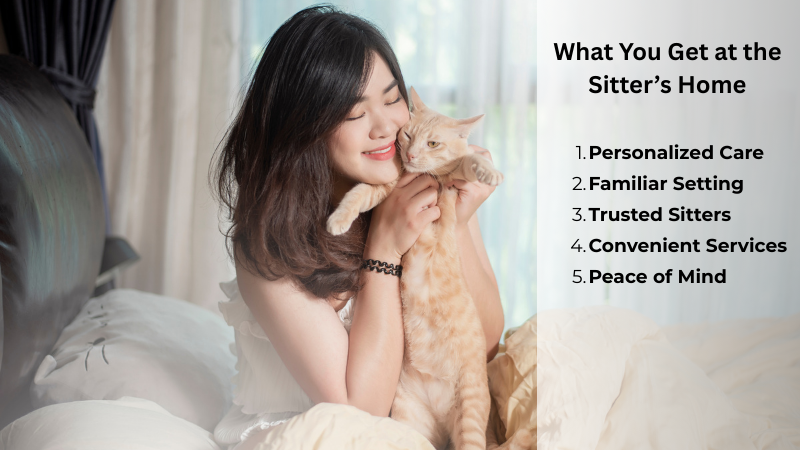
- Personalized Care
Each pet receives one-on-one attention tailored to their routine, personality, and specific needs, including feeding, exercise, and medication. - Familiar Setting
Sitter’s homes are designed to be calm, comfortable, and pet-friendly, helping your pet feel relaxed and at ease. - Trusted Sitters
Professional sitters are trained, experienced, and passionate about animal care, ensuring your pet is in safe and reliable hands. - Convenient Services
Home boarding can include meals, playtime, walks, basic grooming, updates, and more offering a complete care package for your pet while you’re away. - Peace of Mind
Knowing your pet is comfortable, happy, and supervised allows you to travel or focus on other commitments without worry.
Which type of boarding is best for cats in the UAE
Cats are creatures of habit, so the right care depends on their personality and routine.
1. In-home cat boarding vs. traditional boarding
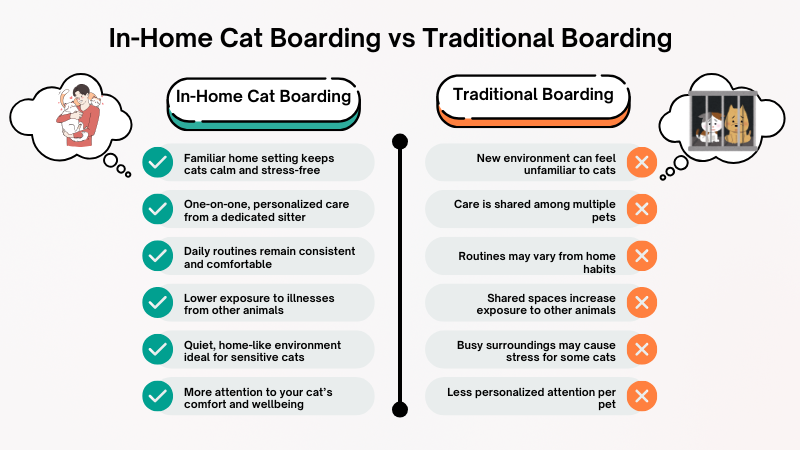
In-home cat boarding lets your cat stay in a quiet, home-like environment with personalized care and attention, reducing stress and maintaining their routine.
Traditional boarding facilities or kennels, while structured, can be noisy, crowded, and less personal, which may cause anxiety for most cats.
Best Choice:
For most cats in the UAE, in-home cat boarding is the gentlest and most comfortable option, keeping them safe, happy, and stress-free while you’re away.
2. In-Home Cat Boarding vs Kennels:
In-home cat boarding provides a calm, home-like environment where your cat receives one-on-one care, regular meals, playtime, and supervision. Kennels, on the other hand, are often designed for dogs, can be noisy, cage-based, and stressful for most cats.
Best Choice:
For cats in the UAE, in-home cat boarding is usually the best option, offering comfort, safety, and personalized attention while avoiding the stress of kennels.
3. In-home cat boarding vs cat sitting
In-home cat boarding has your cat stay at the sitter’s home, providing 24/7 supervision, social interaction, and structured care. A cat sitting, however, keeps your cat in their own home, following their usual routine with minimal stress.
Best Choice:
- Shy, anxious, or routine-loving cats: Cat sitting at home
- Friendly, adaptable cats who enjoy social interaction: In-home boarding
Both options offer personalized care, but the right choice depends on your cat’s personality and comfort level.
Is Cat Boarding Safe for Cats?
Yes, cat boarding can be safe if you choose a reputable, professional facility with strict health protocols, good enrichment, and experienced staff, but it can also be stressful or risky due to potential disease spread, unfamiliar environments, and lack of personalized attention, making in-home pet sitting often a better choice for many cats
When Boarding Can Be Safe & Good
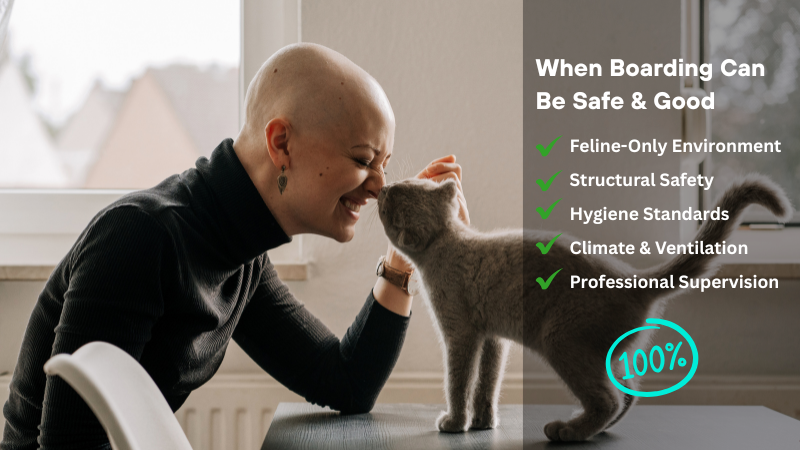
Professional pet boarding provides a secure and beneficial environment for pets, offering owners peace of mind. Key reasons why it can be a good and safe option include:
- Professional Care: Staff are trained in animal care, behavior, and special needs, including medication administration and diet routines.
- Peace of Mind: With secure facilities, emergency protocols, and regular updates (photos or messages), owners can focus on travel or commitments without worry.
- Health & Safety Protocols: Boarding facilities follow strict sanitation standards, require up-to-date vaccinations, and enforce parasite prevention.
- Veterinary Access: Many facilities have relationships with local vets or on-site veterinarians, and staff are trained in first aid and CPR for emergencies.
Risks & Downsides
While professional pet boarding provides many benefits, it’s important to be aware of potential risks:
- Stress: Some pets may feel anxious or overwhelmed in a new environment, especially in busy or crowded facilities.
- Disease Transmission: Even with strict health protocols, boarding facilities carry a small risk of spreading illnesses between animals.
- Escape: There’s a slight risk that a pet could escape or get lost if safety measures aren’t carefully followed.
Tips for Ensuring Safety
- Choose Wisely: Select a reputable, professional boarding facility with trained staff, secure enclosures, and good reviews.
- Update Health: Ensure your pet’s vaccinations and parasite preventatives are current before boarding.
- Bring Familiar Items: Provide favorite toys, bedding, or blankets to help your pet feel comfortable and reduce stress.
- Diet & Medications: Share detailed instructions about your pet’s diet, feeding schedule, and any medications to ensure continuity and health.
Modern cat boarding facilities and professional pet-sitting services increasingly leverage technology to provide peace of mind for owners. These services offer various tech-enabled features, primarily through dedicated apps and secure web platforms.
Key technology and communication features commonly available include:
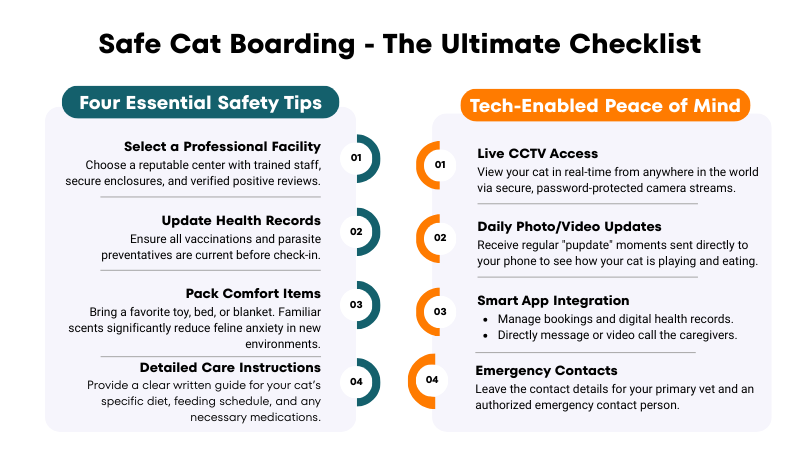
CCTV & Live Camera Access
This allows owners to check in on their cats in real-time, anytime, anywhere in the world, using a secure, password-protected connection. Some even offer playback features to view the past 24 hours of activity.
Daily Photo & Video Updates
For facilities without continuous live streams, or as an additional service, regular photo and video updates are a standard offering. These “moments” or check-ins are sent directly to the owner’s phone via an app, email, or messaging service, keeping them informed of their pet’s well-being and activities.
App-Based Communication
The use of dedicated mobile apps like pawland app. These apps serve as a central hub for:
- Booking and managing reservations.
- Receiving updates (photos/videos/text).
- Direct messaging or video calling with caregivers.
- Accessing live camera streams.
These technological advancements enhance transparency and customer engagement, building trust and ensuring owners feel connected to their pets while away.
Legal & Ethical Aspects of Cat Boarding
Ensuring your cat’s safety and well-being goes beyond care it involves legal compliance and ethical responsibility.
Licensing & Regulations
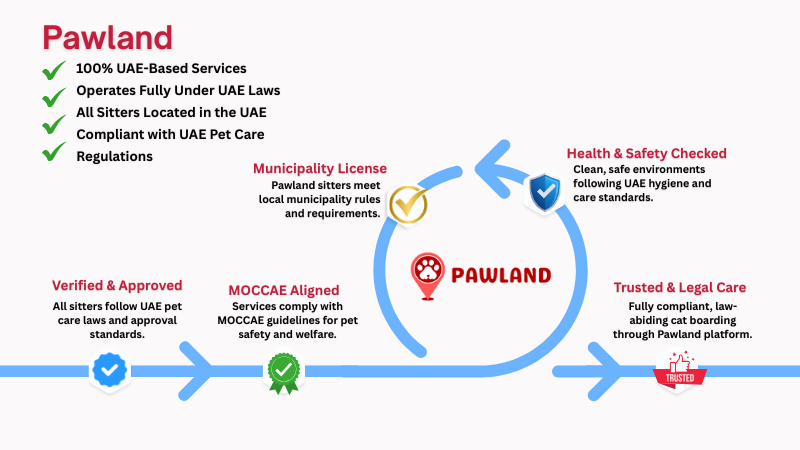
Choose facilities that comply with UAE animal care laws and hold the required licenses. This ensures proper supervision, health standards, and legal accountability.
Insurance & Liability Coverage
Reputable boarding facilities carry insurance to protect pets and owners in case of accidents, illness, or property damage.
Pet Care Contracts Explained
A clear contract outlines services, schedules, fees, emergency procedures, and responsibilities, providing transparency and protecting both parties.
Ethical Treatment Standards
- Safe, clean, and stress-free environments
- Proper food, water, exercise, and attention
- Humane treatment and respect for your cat’s comfort
- Open communication and updates to owners
How to Choose Cat Boarding
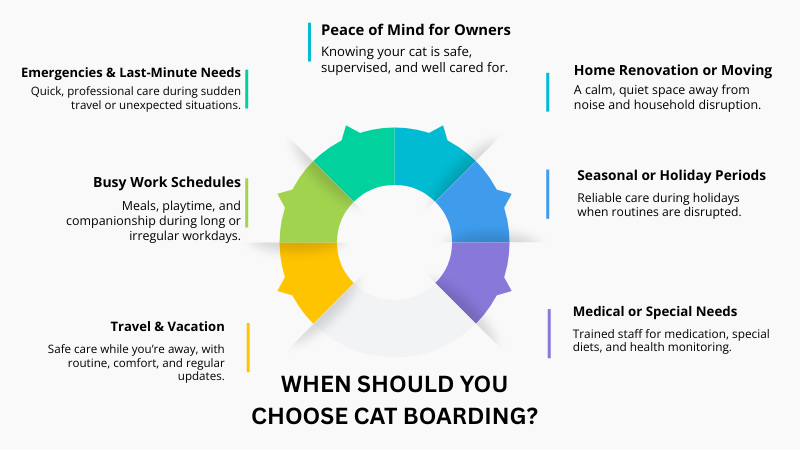
Professional cat boarding is not just for vacations, it’s a reliable solution whenever your cat needs consistent care and supervision. Here are the main situations when boarding can be the best choice:
1. Travel & Vacation
Going on a holiday or business trip can leave your cat alone for long periods. Cat boarding provides a safe and comfortable environment with trained staff who follow your pet’s routine. Many facilities also offer updates, photos, and videos so you can see that your cat is happy and cared for while you’re away.
If you want to know what steps to take for your pet before going on a trip or vacation, you can explore this guide, which provides a step-by-step guide.
2. Busy Work Schedules
For long workdays, irregular hours, or extended shifts, cats can get lonely, bored, or stressed. Daily visits or overnight boarding ensure your cat receives meals, playtime, and companionship, maintaining their health and emotional well-being.
3. Emergencies & Last-Minute Needs
Unexpected situations, such as sudden travel, illness, or family emergencies, may leave no time to arrange care. Boarding services provide immediate, professional attention to keep your cat safe and comfortable during these stressful periods.
Pawland accommodates last-minute bookings and confirms sitter availability quickly to ensure your pet is cared for without delay.
4. Home Renovation or Moving
Construction, loud noises, or home disruption can be extremely stressful for cats. Boarding offers a calm, secure environment away from the chaos, helping your cat stay relaxed until the situation settles.
5. Seasonal or Holiday Periods
During peak travel seasons, public holidays, or festival periods, many pet owners need reliable care. Booking cat boarding ensures your pet isn’t left alone and avoids stress associated with unfamiliar visitors or irregular routines.
6. Medical or Special Needs
Cats with health conditions, special diets, or medication schedules benefit from professional boarding, where trained staff can administer care accurately and monitor their health closely.
7. Peace of Mind for Owners
Even if your cat is independent, knowing they are in a safe, supervised, and caring environment provides stress relief for owners. Boarding ensures routine, safety, and personalized attention, giving both you and your cat confidence and comfort.
Cats Best Suited for Boarding
Cats best suited for boarding are generally easygoing, adaptable adults like British Shorthairs, while kittens need socialization, seniors need low-stress environments with medical care, and special needs cats require specialized facilities, though most healthy cats can board with proper planning, emphasizing calm temperaments and suitable care. Key factors are a cat’s baseline health, stress tolerance, and the facility’s ability to cater to specific needs, from medication to quiet spaces, with calm, independent breeds often thriving.

1. Boarding for Adult Cats (General)
- Best Suited: Independent, calm, adaptable breeds (American Shorthair, British Shorthair, Ragdoll, Persian).
- Needs: Consistent routine, quiet environment, low-stress interaction, potentially pheromone diffusers.
- Key: A cat comfortable with its own company and less prone to separation anxiety will generally adapt better.
2. Boarding for Kittens
- Best Suited: Socialized, healthy kittens from reputable breeders or shelters.
- Needs: Gentle handling, consistent feeding, safe play, frequent socialization, and often specialized care for very young kittens.
- Considerations: Kittens are more vulnerable and need constant monitoring for health and social development, making experienced caregivers essential.
3. Boarding for Senior Cats
- Best Suited: Calm, stable seniors with predictable routines.
- Needs: Quiet, temperature-controlled spaces, soft bedding, low-impact routines, gentle handling, and very close health/medication monitoring.
- Key: Stress is a major issue; choose facilities with low-stress environments and experience with geriatric care.
5. Boarding for Cats with Special Needs (Medical/Behavioral)
- Best Suited: Cats whose needs can be met by specialized boarding (e.g., chronic conditions like hyperthyroidism, mobility issues).
- Needs: Experienced staff for medication (pills, liquids, topicals), orthopedic support, ramps, specialized diets, and understanding of complex conditions like diabetes or arthritis.
- Key: Look for vets or catteries with advanced care capabilities, not just general boarding.
Choosing the Best Cat Sitter for Boarding
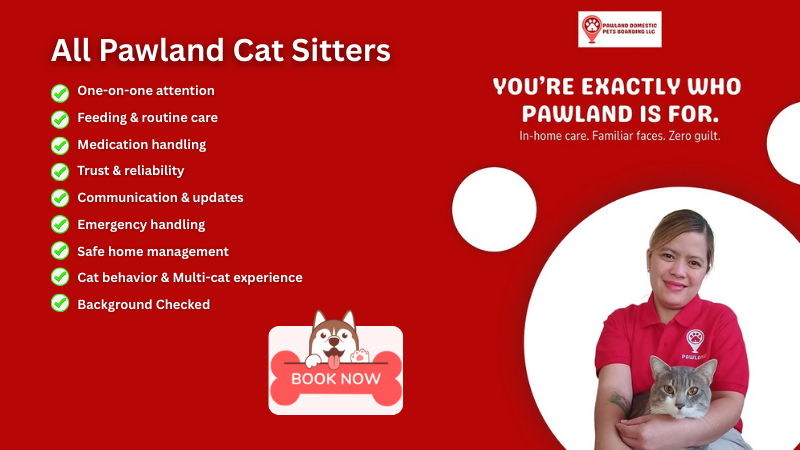
To choose the best cat sitter for boarding, prioritize experience with felines, check references and insurance, conduct a thorough in-home meet-and-greet to see how they interact with your cat and discuss emergency plans, and look for qualifications or training in animal care, ensuring they offer daily updates and you feel completely comfortable with them
Key Qualities to Look For
- Experience & Knowledge: Knows cat behavior, recognizes signs of illness/stress, can handle meds, and understands multi-cat dynamics.
- Trustworthy & Reliable: Follows through, shows up on time, respects your home, and has insurance/bonding.
- Compassionate & Attentive: Genuinely loves animals, patient, and attuned to your cat’s preferences (cuddles, quiet time).
- Communication: Provides regular updates, photos, and has clear contact methods.
- Problem-Solving Skills: Has a plan for emergencies and backups.
Questions to Ask
- Experience with cats like yours, special needs, medications?
- What does a visit include (feeding, litter, play)?
- How will you update me (photos, texts)?
- What’s your emergency protocol (vet, backup sitter)?
- Are you insured/bonded? Can you provide references?
Before You Book & Meet-and-Greet
- Check References/Reviews: Look at online reviews or ask for client references.
- Observe: Watch how they interact with your cat during the meet-and-greet, they should be focused on your cat, not just you.
- Discuss Routine: Go over feeding, litter, play, and any quirks in detail.
Top 5 Cat Boarding Companies in the UAE
Top cat boarding options in the UAE often include Pawland for personalized in-home care, Petsville for luxury stays, Urban Tails for resort-style amenities, Dubai Kennels & Cattery (DKC) for established facilities, and Pawsome Friends known for dedicated care in areas like JLT, all offering varying levels of luxury, security, and personalized attention for your feline companion, with services ranging from basic care to specialized medical needs.
Here are 5 popular choices in the UAE
1. Pawland

Highly-rated for personalized, in-home care with licensed, insured, and background-checked sitters, offering services like feeding, grooming, medication, and constant updates, including options for cats with low immunity.
2. Petsville: Known for luxury dog stays but also offers excellent cat boarding with quiet, climate-controlled, and secure environments, focusing on individual care for a relaxed stay, say Pet Pulse Emergency Veterinary Clinic.
3. Urban Tails Pet Resort: A well-known facility offering extensive services, including boarding, daycare, and grooming, providing a comprehensive resort experience for pets.
4. Dubai Kennels & Cattery (DKC): A long-standing and reputable option in Dubai for boarding and cattery services.
5. Pawsome Friends: A local favorite in JLT, offering excellent care and recently adding dedicated cattery facilities, ensuring cats are well looked after.
Preparing for Cat Boarding
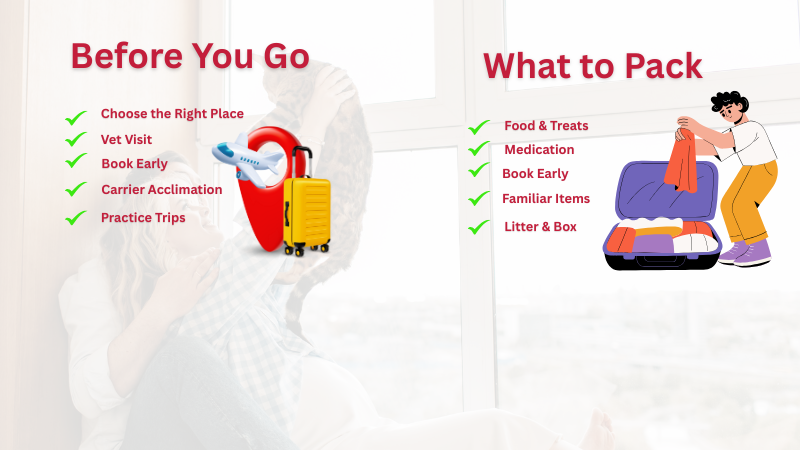
Preparing for cat boarding involves getting your cat’s health records in order, familiarizing them with their carrier, packing familiar comforts, and choosing a reputable facility for the sitter/facility. The sitter/facility provides detailed instructions and essentials, while the owner ensures home security and clear information handover, all to reduce stress and ensure a smooth, safe stay for the cat.
Preparing Your Cat
- Health Check: Ensure vaccinations (rabies, feline distemper) are current and discuss any needs with your vet.
- Carrier Acclimation: Make the carrier a positive space with treats, toys, or familiar bedding.
- Comfort Items: Pack favorite toys, blankets, or beds with familiar scents.
- Diet & Routine: Bring their regular food to prevent upset stomachs and try to maintain feeding schedules.
- Familiarization: Consider short trial visits to the facility if possible.
Preparing the Sitter/Facility (Checklist for Owner)
- Vaccination Proof: Have records ready.
- Detailed Care Sheet: Include feeding, medication (with dosages), vet info, and behavioral quirks.
- Supplies: Provide plenty of food, litter, medications, and cleaning supplies.
- Home Prep: Secure hazards (chemicals, chocolate), block off restricted rooms, ensure gates/flaps are secure, and clear space for the sitter.
- Emergency Info: Leave contact details for yourself and your emergency contact/vet.
Preparing Yourself (The Owner)
- Research Facilities: Choose a clean, safe place with experienced staff.
- Tour & Ask Questions: Understand routines, staff-to-cat ratios, and policies.
- Book Early: Especially during peak times.
- Final Walk-Through: Confirm all preparations with the sitter/facility before leaving.
How to Book Cat Boarding Services in the UAE
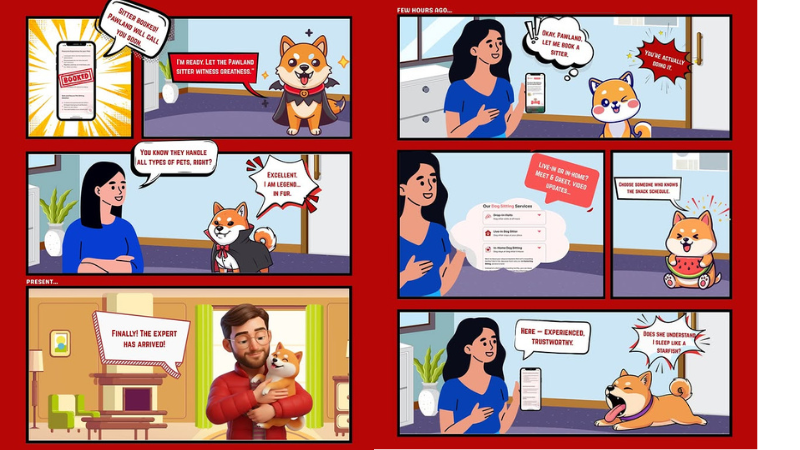
To book cat boarding in the UAE, use apps like Pawland to find verified, background-checked sitters offering home boarding or visits, ensuring safety with profiles, reviews, and direct communication before booking for daycare, walking, or overnight care, with costs varying by service.
Using Apps & Online Platforms
- Download & Create Profiles: For example, you can visit the Pawland app or website, create a profile for yourself and your cat, and easily add your cat’s care needs so Pawland can match you with the right sitter.
- Find Sitters: Browse for certified, vetted sitters in your area, filtering by experience, reviews, and services (daycare, overnight, walking).
- Book & Communicate: Select dates, book services (in-home or sitter’s home), and chat directly with sitters for updates and questions.
- Verify & Meet: Platforms like PetBae use Emirates ID and quizzes, Pawland arranges a free meet-and-greet with sitters before booking.
Using a Dedicated Cat Sitter (Home-Based/In-Home)
- Choose Your Sitter: Find local sitters through apps (Pawland, Pet Watch, PetBae) or dedicated pet care websites.
- In-Home Care: Arrange for the sitter to stay in your home (ideal for cats) or for your cat to stay in their home for personalized care.
- Get Updates: Expect frequent photo/video updates while you’re away to see your cat’s activities.