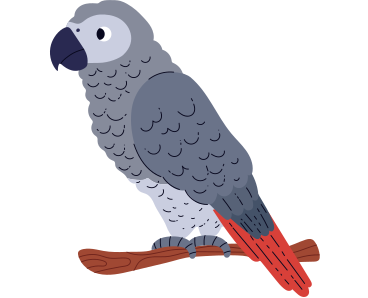


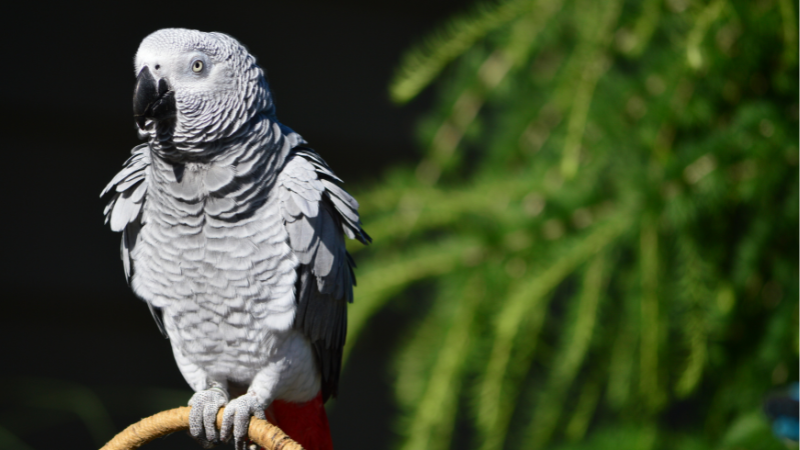
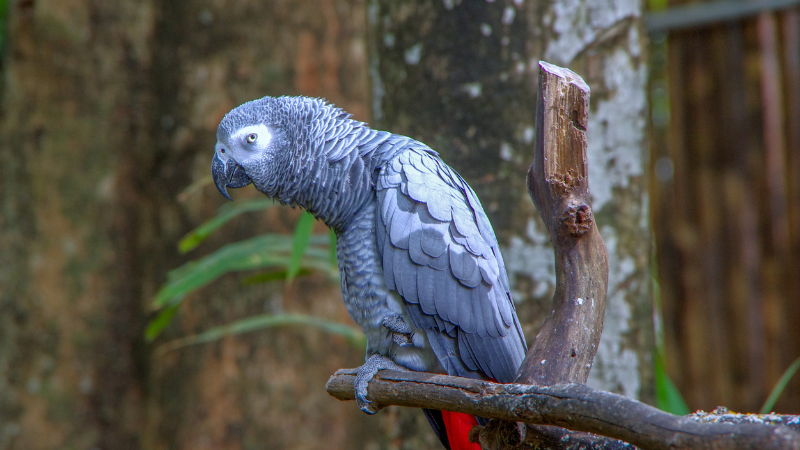
The African Grey is one of the cleverest pet birds in the world. It can learn words, solve puzzles and bond closely with its family. That cleverness also means it needs more than food and water. Your African Grey needs a good diet, a roomy cage, daily play, plenty of sleep and lots of company.
This guide answers the questions African Grey owners ask most, in simple steps.
What Does an African Grey Parrot Need Every Day?
An African Grey parrot needs fresh food, clean water, time out of its cage, play, conversation and 10 to 12 hours of sleep every day.
A simple daily routine looks like this:
- Morning: uncover the cage, give fresh food and water
- Daytime: time out of the cage, play and puzzle toys
- Evening: talk, training and a second fresh meal
- Night: cover the cage in a quiet, dark room for 10 to 12 hours of sleep
Good to know: African Greys often live 40 to 60 years. Caring for one is a lifelong commitment.
How Big Should an African Grey’s Cage Be?
An African Grey’s cage should be big enough for it to spread its wings fully and climb around freely.
- Choose the biggest cage you can, with strong, close bars it can’t squeeze through
- Add perches of different sizes and materials to keep its feet healthy
- Place food and water bowls away from perches, so they stay clean
- Keep the cage in a busy family room, but away from the kitchen, windows and AC vents
Even with a big cage, your African Grey needs time out of it every day to stretch, climb and be with you.
What Should You Feed an African Grey Parrot?
Feed an African Grey parrot a diet based on good-quality bird pellets, with fresh vegetables every day and only small amounts of fruit, seeds and nuts.
Feed:
- Bird pellets as the main food
- Fresh vegetables, like carrot, broccoli, peppers and leafy greens
- Small amounts of fruit, like apple (no seeds) or orange
- A few seeds or nuts as treats or training rewards
Never feed:
- Avocado
- Chocolate, coffee or tea
- Salty, fried or sugary food
- Alcohol
Change the water every day, and remove fresh food after a few hours so it doesn’t spoil in the heat.
Why Do African Greys Need Calcium and Light?
African Greys need calcium for strong bones and healthy nerves, and they are more likely than many birds to run low on it.
- A pellet-based diet with leafy greens helps them get enough
- Ask your vet whether your bird needs a calcium supplement
- Give some natural daylight, or ask your vet about a special bird UVB light. Sunlight through window glass doesn’t count.
Weakness, wobbling or falling off perches can be signs of low calcium, and your bird needs a vet straight away.
How Much Attention Does an African Grey Need?
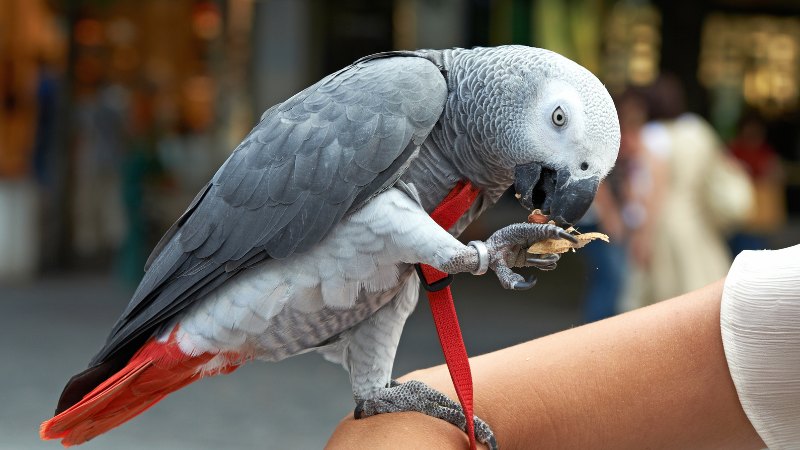
An African Grey needs several hours of time with you every day, both in and out of its cage.
These birds are very social. In the wild, they live in flocks, and at home, you are their flock. Spend time:
- Talking to your bird during the day
- Teaching simple words and tricks with treats
- Letting it sit near you while you work or relax
- Playing gentle games out of the cage
A lonely African Grey can become stressed, noisy or start pulling out its feathers.
How Do You Keep an African Grey Busy?
You keep an African Grey busy with toys that make it think, chew and search for food.
- Foraging toys: hide food inside so your bird has to work for it
- Chew toys: safe wood, paper and cardboard
- Puzzle toys: easy at first, then harder
- Rotate toys: swap them every week so they stay interesting
Why Does an African Grey Pull Out Its Feathers?
An African Grey may pull out its feathers because of boredom, stress, loneliness, poor diet or illness.
To help:
- Give more time and attention every day
- Add more foraging and chew toys
- Make sure it sleeps 10 to 12 hours in a quiet room
- Keep its routine steady
Always see an avian vet if you notice feather plucking, to rule out a health problem.
How Do You Make Your Home Safe for a Parrot?
You make your home safe by removing fumes, closing windows and doors, and watching your bird whenever it’s out of its cage.
- Non-stick pans: overheated non-stick cookware gives off fumes that can kill birds, so keep your parrot far from the kitchen
- Sprays and smoke: avoid air fresheners, scented candles, smoke and strong cleaners near your bird
- Windows and doors: keep them closed when your bird is out
- Ceiling fans: switch them off during out-of-cage time
- Other pets: never leave cats or dogs alone with your bird
How Do You Keep an African Grey Comfortable in the UAE Heat?
You keep an African Grey comfortable by keeping its cage out of direct sun, giving fresh water often and avoiding cold AC drafts.
- Never place the cage near a sunny window
- Keep the room cool, but not right under an AC vent
- Offer a shallow bath or a gentle water mist, which many Greys enjoy
- Refill water more often in summer
Panting, holding wings away from the body or sitting very still in heat are warning signs.
When Should You Take Your African Grey to the Vet?
Take your African Grey to an avian vet if it sits fluffed up, stops eating, or its droppings suddenly change.
Other warning signs:
- Sitting on the cage floor
- Tail bobbing with each breath
- Discharge from the eyes or nose
- Feather plucking
- Weakness or falling off perches
Birds hide illness well, so act quickly. A yearly check-up with an avian vet helps catch problems early.
Who Looks After Your African Grey When You’re Away?
When you’re away, an African Grey needs someone who will feed it, talk to it and keep its daily routine the same.
Because African Greys are sensitive to change, staying at home is often the calmest choice. With Pawland’s bird sitting, a sitter visits your home to:
- Give fresh food and clean water
- Clean the cage and bowls
- Spend time talking and playing with your bird
- Cover the cage at night and uncover it in the morning
- Watch for any signs it isn’t well
If you’d prefer, Pawland can also look after your bird through home bird boarding, where it stays with a sitter in a calm home setting.
What Should You Tell Your Bird’s Sitter?
Tell your sitter what your bird eats, when it sleeps, what it likes and how to reach your vet.
- Food, amounts and treats
- Wake-up and bedtime, and when to cover the cage
- Favourite toys, words and games
- What it must never eat
- Your avian vet’s phone number