

If you’ve ever come home to a trashed living room, a hoarse-sounding cat, or a puddle outside the litter box that definitely wasn’t there this morning, you already know something’s wrong. Cats have a reputation for being aloof, independent little loners who couldn’t care less if you vanished for a weekend. But anyone who’s lived with a clingy, vocal, or anxious cat knows that reputation is often nonsense. Some cats bond hard, and being left alone genuinely stresses them out.
Why Some Cats Struggle With Being Alone
The “cats are solitary animals” myth has taken a beating in recent years, and for good reason. Domestic cats descended from a mostly solitary wild ancestor, sure, but thousands of years of living alongside humans has changed the game considerably. Many cats form deep attachment bonds with their people, not unlike the way dogs do, and research on cat-human relationships has increasingly supported this. When that bond gets interrupted by an empty house, some cats handle it fine, while others spiral into genuine distress. It’s not a character flaw or a training failure on your part; it’s just how that particular cat is wired, shaped by genetics, early socialization, and personal history.
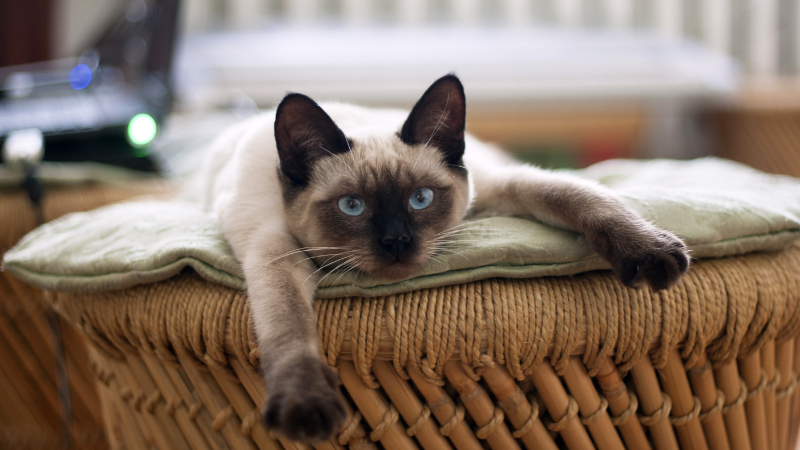
Breed also plays a role here, though it’s not the whole story. Oriental breeds like Siamese and Burmese are famously chatty and people-oriented, often forming a single strong bond with one person and struggling hard when that person disappears. Rescue cats with uncertain histories can also develop separation-related distress, especially if they experienced abandonment or instability before finding a stable home. Kittens who were weaned too early, cats who’ve only ever known one household, and cats who’ve recently been through a move or a change in family structure are all more susceptible. Basically, if your cat’s world has ever felt unpredictable, being alone can start to feel like a threat rather than a nap opportunity.
What Separation Anxiety in Cats Actually Looks Like
Here’s where things get tricky, because cat separation anxiety doesn’t always look like what you’d expect. Dogs howl at the door and shred the couch cushions; cats are sneakier about their misery. You might notice excessive vocalization the moment you pick up your keys, or your cat following you from room to room like a tiny, furry shadow who’s convinced you’re about to disappear forever. Some cats develop what looks suspiciously like a stress response tied to litter box habits, urinating or defecating outside the box specifically when left alone, even though they use it perfectly well when you’re home. Others go the opposite direction and stop eating, or eat far too fast the second you return, as if making up for lost time.
Grooming behaviors are another giveaway that’s easy to miss. A cat who’s overgrooming to the point of bald patches, especially on the belly or inner legs, is often self-soothing through a stressful situation, and that situation is frequently your absence. Destructive behavior around exits, like scratching at doors or windows, tells a similar story. Vomiting, excessive drooling, or pacing right before you leave can also signal genuine anticipatory anxiety rather than random cat weirdness. The tricky part is that any one of these symptoms alone could mean something else entirely, from a medical issue to boredom to a dirty litter box, so a vet visit to rule out physical causes is a smart first move before you assume it’s purely emotional.
Will a Cat Sitter Actually Help?
This is the million-dollar question, and the honest answer is: it depends on what’s actually driving the anxiety. Cat sitting services can be genuinely transformative for cats whose distress is rooted in loneliness, boredom, or a disrupted routine, because a good sitter restores structure and adds a friendly presence during the hours you’d otherwise be gone. Think of it less like babysitting and more like keeping the social fabric of your cat’s day intact. Feeding on schedule, playing with a wand toy, scooping the litter box, and just sitting nearby talking or petting your cat can meaningfully lower stress hormones and reduce the acting-out behaviors that come from an empty, silent house.
That said, a cat sitter isn’t a magic fix for every flavor of anxiety, and it’s worth being honest about that upfront. If your cat’s distress is specifically tied to your absence rather than being alone in general, a quick drop-in visit might barely register, or could even add a layer of confusion if your cat doesn’t know this new person. In cases like that, longer visits or overnight stays tend to work far better than a quick check-in. There’s also a subset of cats whose anxiety is severe enough that behavioral intervention or veterinary support, sometimes including anti-anxiety medication, needs to happen alongside the sitter arrangement rather than instead of it. A sitter treats the symptom of an empty house; it doesn’t necessarily treat the underlying attachment issue.
Types of Cat Sitting Arrangements to Consider
Picking the right kind of care matters just as much as picking a qualified person, and the options aren’t one-size-fits-all. A traditional drop-in visit, where someone comes by once or twice a day for feeding, litter duty, and a bit of playtime, works well for cats with mild independence and a manageable routine. For cats with stronger attachment needs, longer visits of an hour or more give time for real bonding, a proper play session, and some quiet lap time that mimics what you’d normally provide. Overnight sitting, where someone actually stays in your home, tends to be the gold standard for anxious cats, since it keeps the house occupied around the clock and avoids that jarring stretch of total silence overnight.
Boarding at a cattery or vet clinic is worth mentioning too, mostly so you can rule it out for anxious cats in most cases. Removing an already-stressed cat from their familiar territory and placing them in a new environment with unfamiliar smells and other animals nearby often backfires, cranking anxiety up rather than down. A comparison table can make the trade-offs clearer at a glance.
Care Option | Best For | Watch Out For |
Drop-in visits (20-30 min) | Mildly independent cats, short trips | May not be enough for highly attached cats |
Extended visits (1+ hour) | Cats needing more social interaction | Higher cost per visit |
Overnight sitting | Cats with real separation anxiety | Requires trust in someone staying in your home |
Live-in sitter | Severe anxiety, long trips | Most expensive option |
Boarding facility | Cats who travel well, medical monitoring needs | Often worsens anxiety in sensitive cats |
Finding and Vetting the Right Cat Sitter
Not every cat sitter is created equal, and for an anxious cat, the wrong personality match can undo any potential benefit. Look for someone with genuine cat-specific experience rather than a generalist pet sitter who mostly handles dogs, since cats communicate stress differently and a sitter needs to read subtle body language cues like flattened ears, a swishing tail, or a cat who’s suddenly hiding under the bed. Ask potential sitters how they’d handle a cat who won’t come out, or one who’s hissing at them on day one, because their answer tells you a lot about their patience and approach. This is where working with an established, background-checked provider rather than a random listing can save you a lot of guesswork, and arranging a meet-and-greet session before any actual booking begins gives you a low-stakes way to see if the personalities click before you’re actually relying on them.
Consistency matters more than almost anything else here. If your cat responds well to a sitter, try to book that same person every time rather than rotating through different faces, since predictability is often the whole point for an anxious animal. Regular photo or video updates during visits, something several sitting services now offer as standard, can also ease your own anxiety about how things are going, which indirectly helps your cat too, since a calmer, less frantic owner coming home tends to make for a calmer cat. Veterinary behaviorist Dr. Marci Koski, who specializes in feline behavior consulting, has spoken publicly about how routine and environmental predictability are often bigger levers for reducing cat stress than any single intervention. That lines up with what a lot of sitters report anecdotally too: cats who initially hide from a new sitter often warm up within a few visits once the pattern becomes familiar, and the anxiety symptoms taper off accordingly.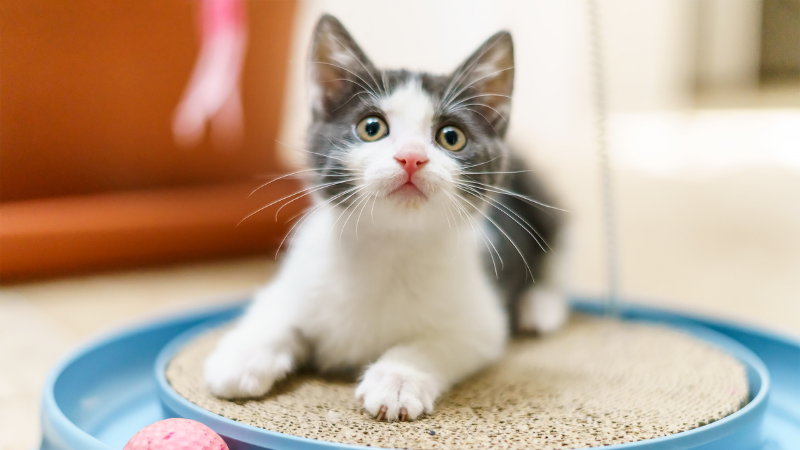
Building a Routine That Actually Reduces Anxiety
A cat sitter works best as one piece of a bigger strategy rather than a standalone solution, and setting up the rest of the environment matters just as much. Puzzle feeders and slow feeders give your cat something to focus on besides the fact that you’ve left, turning mealtime into a small mental workout instead of just fuel delivery. Leaving out an unwashed t-shirt or pillowcase with your scent on it can be surprisingly comforting, since scent is such a dominant part of how cats process their world and familiarity. Background noise, whether that’s a TV left on low or a radio, can also soften the jarring silence of an empty house for cats who are sensitive to sudden quiet.
Vertical space and window access matter more than people usually realize too. A cat with a perch near a window that overlooks bird activity or a quiet street has built-in entertainment that can meaningfully cut down on boredom-driven anxiety. Pairing this environmental enrichment with the sitter’s visits, rather than relying on either alone, tends to produce the best results. Some owners also find success with pheromone diffusers designed to mimic calming feline facial pheromones, which can take the edge off for cats whose anxiety runs on the milder end of the spectrum. None of these tricks replace a sitter for cats with genuine attachment-based anxiety, but they stack well together and make whatever time the sitter isn’t there more tolerable.
When to Loop In a Vet or Behaviorist
If you’ve tried a solid sitter, added enrichment, and your cat is still spiraling every time you leave, it’s worth escalating rather than assuming this is just how your cat is forever. A veterinarian can rule out medical causes that mimic anxiety symptoms, like hyperthyroidism or urinary issues, before you go down the behavioral route entirely. From there, a feline behaviorist can help design a more targeted desensitization plan, sometimes involving short, gradually lengthening practice departures that teach your cat that you always come back. In more severe cases, vets do sometimes prescribe anti-anxiety medication as a bridge while behavioral changes take hold, and there’s no shame in that if it genuinely improves your cat’s quality of life.
The goal isn’t necessarily to eliminate every trace of your cat missing you, since some degree of that is honestly just a sign of a good bond. The goal is making sure your cat can tolerate normal, everyday absences without spiraling into destructive or self-harming behavior. A layered approach, combining a compatible sitter, environmental enrichment, and professional guidance when needed, tends to get cats to that more manageable place far more reliably than any single fix on its own.
Choosing the Right Care for Your Cat
Leaving a cat alone can be stressful, especially for cats with separation anxiety or strong attachment to their owners. Pawland offers flexible care options to help pet parents choose the right support while keeping their cats safe, comfortable, and well cared for.
Cat Sitting Services
Cat sitting services allow your cat to stay in the comfort of their own home while receiving personalized care. Pawland sitters can help with feeding, playtime, litter box cleaning, and companionship while maintaining your cat’s familiar daily routine.
Cat Boarding Services
Cat boarding services provide a safe care option when in-home care is not suitable for your travel plans. With proper supervision and personalized attention, Pawland helps pet parents find suitable boarding care based on their cat’s individual needs.