


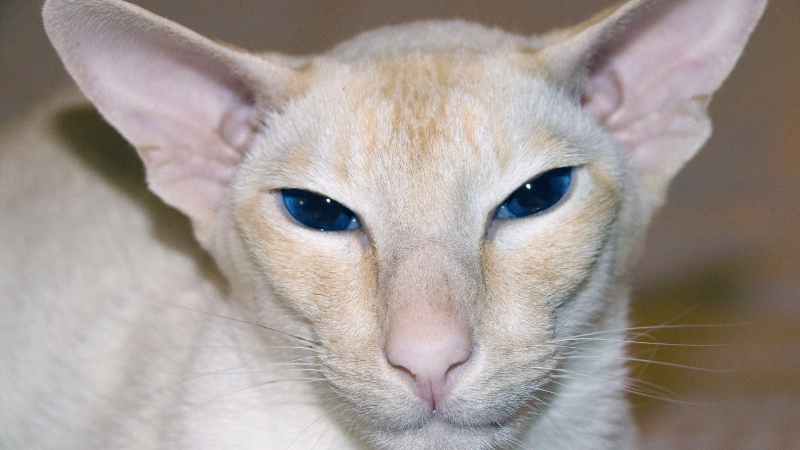
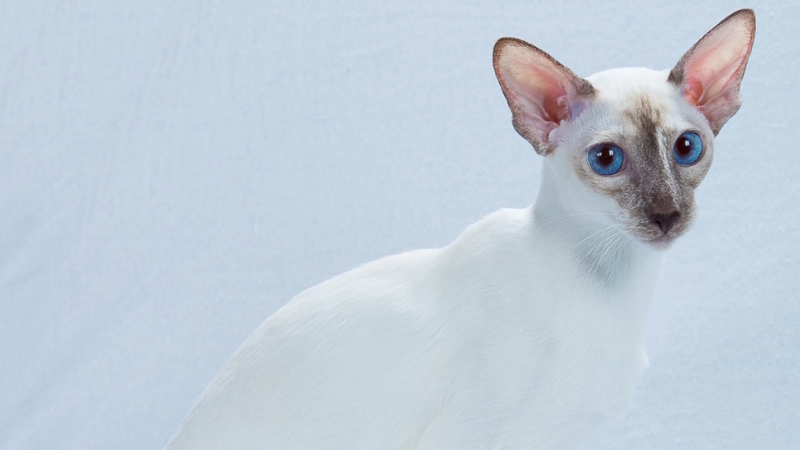
The Colorpoint Shorthair is an elegant, intelligent cat breed closely related to the Siamese. They share the same lean body, large ears, and vivid blue eyes. However, they are distinguished by 16 unique “point” colors, including red, cream, tortoiseshell, and lynx points.
The breed originated in the 1940s and 1950s. Breeders wanted to expand the traditional Siamese color palette. They crossed Siamese cats with American Shorthairs and red tabbies. This introduced red and cream genes into the lineage. Breeders then backcrossed the offspring with Siamese cats for generations. This process preserved the classic athletic build and vocal personality. The Cat Fanciers’ Association officially recognized them as a distinct breed in 1964.
Physical Characteristics of the Colorpoint Shorthair
The Colorpoint Shorthair is a medium-sized, elegant, and highly athletic cat breed characterized by its striking lean build, vivid blue almond-shaped eyes, and unique “pointed” coat colors inherited from its close cousin, the Siamese.
Body Build and Structure
- Frame: Long, slender, and tubular torso with a tight abdomen.
- Weight: Typically ranges from 5 to 12 pounds, with males being noticeably larger than females.
- Legs: Long and slim, with hind legs that sit slightly higher than the front legs.
- Paws: Small, dainty, and distinctly oval-shaped.
- Tail: Long, thin, and tapering neatly down to a fine point.
Head and Facial Features
- Shape: A long, tapering wedge shape that outlines a perfect triangle from the nose to the ear tips.
- Profile: Long, straight nose stretching from the flat skull to a thin muzzle.
- Eyes: Medium-sized, almond-shaped, slightly slanted toward the nose, and always a deep, vivid blue color.
- Ears: Unusually large, pointed, and wide at the base, continuing the triangular lines of the head.
Colorpoint Shorthair Personality and Temperament
Explain that the Colorpoint Shorthair is one of the most affectionate, intelligent, and vocal cat breeds. Describe its strong bond with family members, playful nature, curiosity, and desire to be involved in daily activities. Mention that it thrives on attention, enjoys interactive play, learns quickly, and adapts well to homes where it receives regular companionship.
Are Colorpoint Shorthair Cats Friendly?
Discuss how they are highly social with their owners, generally get along well with children, and can coexist peacefully with other cats and cat-friendly dogs when properly introduced. Explain that they may be reserved with strangers at first but usually warm up quickly.
Intelligence and Trainability
Describe their high intelligence, problem-solving abilities, and eagerness to learn. Explain that they can be taught tricks, respond well to positive reinforcement, enjoy puzzle toys, and may even learn to walk on a harness or play fetch.
Do Colorpoint Shorthair Cats Like to Be Alone?
Explain that this breed does not tolerate long periods of isolation well. Mention that they can become bored or develop unwanted behaviors if left alone for extended hours. Suggest providing interactive toys, climbing structures, or a companion pet if the household is frequently empty.
Feeding and Nutrition
Explain that the Colorpoint Shorthair benefits from a balanced, high-protein diet that supports its lean, athletic body and active lifestyle. Cover the importance of feeding age-appropriate food, maintaining healthy portion sizes, and providing constant access to fresh water. Mention that regular weight monitoring helps prevent obesity and supports long-term health.
Best Diet for a Colorpoint Shorthair
Discuss the nutritional needs of kittens, adults, and senior cats. Explain the benefits of high-quality animal protein, healthy fats, essential vitamins, minerals, and taurine. Mention that both wet and dry food can be part of a healthy diet when properly balanced.
How Much Should a Colorpoint Shorthair Eat?
Provide general feeding guidelines based on age, activity level, body weight, and the calorie content of the food. Explain that portions should be adjusted to maintain an ideal body condition and that overfeeding should be avoided.
Colorpoint Shorthair Cat Lifespan
The average lifespan of a Colorpoint Shorthair cat is 12 to 16 years. Some healthy individuals can even live up to 17 or 18 years with proper veterinary care and an indoor lifestyle.
Key Factors Affecting Lifespan
- Genetic Health Risks: They are prone to hypertrophic cardiomyopathy (heart muscle thickening), crossed eyes, and progressive retinal atrophy.
- Kidney and Dental Care: Kidney disease and severe dental infections can significantly shorten their lives if not caught early through annual blood work and dental cleanings.
- Weight Management: Obesity places severe strain on their lean, athletic frames and internal organs. Keep them slim using meal puzzles and active toys.
- Sterilization: Spaying or neutering by six months protects them from reproductive cancers and reduces risky roaming behaviors.