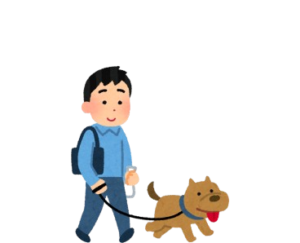
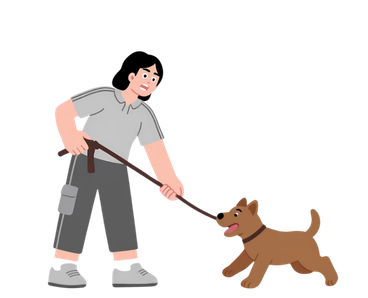


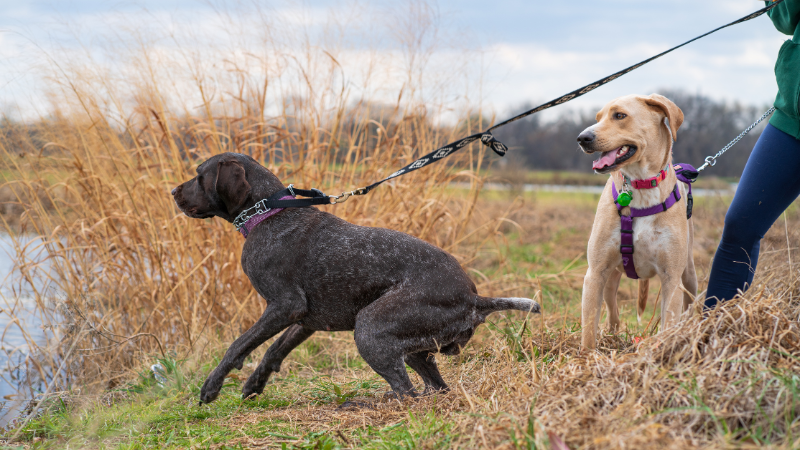
Walking your dog should be a relaxing experience. But when your dog suddenly barks, pulls hard on the leash, or lunges at another dog, even a short walk can become stressful.
The important thing to understand is that lunging does not always mean your dog wants to attack. Fear, anxiety, frustration, overexcitement, poor socialization, or a lack of confidence can all trigger this behavior. Some dogs react because they feel uncomfortable when another dog gets too close, while others simply have not learned how to stay calm around distractions.
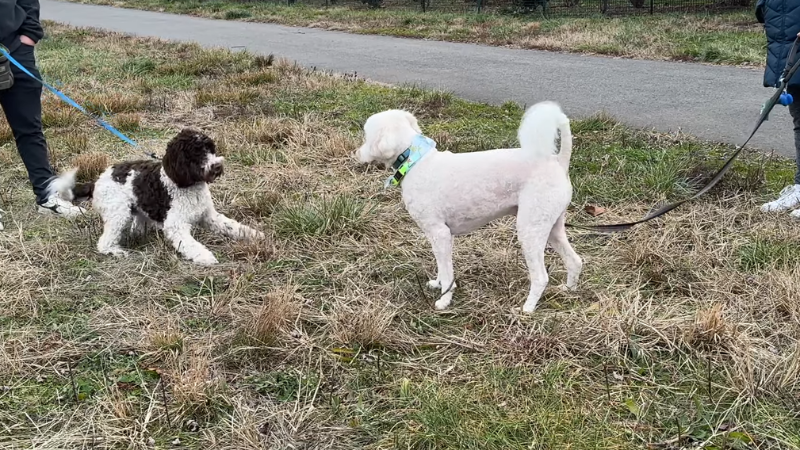
The good news is that with the right approach, many dogs can learn to handle these situations much better. The goal is not simply to punish your dog for reacting, but to understand what is causing the reaction and teach your dog a better response.
Why Does Your Dog Lunge at Other Dogs?
Before trying to stop lunging, you need to understand why it is happening. Dogs communicate through body language, and lunging is often a sign that your dog is experiencing a strong emotional response. A nervous dog may bark, growl, pull forward, or suddenly try to move away when another dog appears. In some cases, the behavior is actually fear-based. Your dog may believe that barking or lunging will make the other dog go away. If the other dog moves away, your dog learns that the reaction worked.
Other dogs may lunge because they are overly excited. They want to greet the other dog but become frustrated because the leash prevents them from getting closer. This is sometimes called leash frustration. Poor socialization can also contribute to the problem. A dog that did not have enough positive experiences with different people, dogs, environments, and situations while young may become unsure when encountering unfamiliar dogs later in life.
Genetics, previous experiences, and the environment can all influence a dog’s behavior. That is why it is important to look at the individual dog rather than assuming every lunging dog has the same problem.
Watch for Early Signs Before the Lunging Starts
One of the most useful things you can learn as a dog owner is how to recognize the signs that your dog is becoming uncomfortable. Your dog may suddenly become stiff, stare at another dog, raise its head, stop responding to you, pull toward the distraction, or show changes in its ears and tail. Some dogs may also lick their lips, yawn, turn their head away, or begin pacing.
These signals can appear before barking or lunging. If you notice them early, you have a better opportunity to help your dog before the reaction becomes intense. Instead of waiting until your dog is already pulling and barking, create distance as soon as you notice the first signs of tension.
Keep Enough Distance From Other Dogs
Distance is one of the most useful tools when working with a reactive dog. If your dog reacts every time another dog comes within 10 feet, you should not begin training at 5 feet. Start farther away, where your dog can notice the other dog without completely losing focus. For some dogs, that distance may be 20 feet. For others, it could be across the street.
The exact distance does not matter as much as your dog’s emotional state. You want your dog to be aware of the other dog while still being able to listen to you. As your dog becomes more comfortable, you can gradually decrease the distance. There is no need to rush because steady progress is more important than getting as close as possible.
Teach Your Dog to Focus on You
A reliable focus cue can make walks much easier. Start practicing at home, where there are very few distractions. Say your dog’s name, and when your dog looks at you, reward that attention. Repeat this until your dog naturally begins checking in with you. Then practice in increasingly distracting environments, such as your yard, a quiet sidewalk, or a park with plenty of space.
Eventually, when another dog appears at a safe distance, you can use the same cue to redirect your dog’s attention back to you. The goal is not to force your dog to ignore every dog forever. Instead, you are teaching your dog that seeing another dog does not automatically mean it needs to react.
Use Direction Changes to Prevent a Reaction
If you notice another dog approaching and your dog is becoming tense, calmly change direction before the situation escalates. A simple U-turn can create distance and give your dog time to settle down. You can also cross the street, step into a driveway, or move behind a parked car if necessary.
This is not giving up or avoiding the problem. You are managing the environment while your dog learns a better response. Over time, your dog can begin to understand that you will handle difficult situations instead of expecting your dog to deal with them alone.
Reward Calm Behavior
Dogs are more likely to repeat behaviors that lead to positive outcomes. When your dog sees another dog and remains calm, reward that behavior with treats, praise, or another reward your dog genuinely enjoys. For example, if your dog notices another dog from a distance and then looks back at you, that is exactly the type of behavior worth reinforcing.
Try to reward your dog before the reaction becomes overwhelming. Once your dog is already barking, lunging, and pulling intensely, it becomes much harder to teach anything in that moment. Timing matters because the reward should help your dog understand which behavior you want to see more often.
Avoid Punishing Fear-Based Reactions
If your dog is lunging because it feels afraid, harsh punishment can make the underlying emotion worse. A dog may stop barking temporarily because it is worried about the correction, but that does not necessarily mean the dog has become comfortable around other dogs. In some cases, the dog can associate the presence of another dog with an unpleasant experience, increasing its anxiety.
Instead, focus on creating distance, keeping your dog below its reaction threshold, and gradually building positive associations with other dogs. If your dog has a history of biting or has seriously injured another animal or person, do not attempt to solve the problem through trial and error. Work with a qualified professional who can assess the behavior and create a safe training plan.
Practice in Controlled Situations
Random encounters on busy sidewalks are not always the best place to teach a reactive dog. Controlled practice can make training easier. For example, you may work with a calm dog at a comfortable distance and gradually allow your dog to become accustomed to its presence.
The other dog does not need to approach your dog. In fact, keeping both dogs at a comfortable distance can be more useful in the beginning. As your dog becomes calmer and more consistent, you can slowly increase the level of difficulty.
Stay Calm During Walks
Dogs often notice changes in our body language and behavior. If you see another dog and immediately tighten the leash, panic, or become tense, your dog may pick up on that change. Try to remain calm and predictable. Keep the leash controlled without constantly pulling on it, use the cues your dog already knows, create distance when necessary, and reward calm behavior.
Your goal is to become a reliable source of guidance rather than another source of stress.
Be Patient With Progress
Lunging usually does not disappear after one training session. Some dogs may show improvement quickly, while others need weeks or months of consistent work. Progress can also be uneven. Your dog may have a great walk one day and react strongly the next, and that does not necessarily mean the training has failed.
Look for small improvements. Maybe your dog recovers faster after seeing another dog, can stay calm from a shorter distance, or looks at you instead of immediately barking. Those small changes are meaningful because they show that your dog is learning.
When Should You Get Professional Help?
If your dog has bitten someone, attempted to bite another dog, lunges with extreme intensity, or is difficult to control physically, professional help is strongly recommended. A qualified dog trainer or veterinary behavior professional can help determine whether the behavior is primarily related to fear, frustration, excitement, anxiety, or another issue.
Professional guidance is particularly important when safety is a concern. The right training plan should consider your dog’s temperament, history, environment, and triggers rather than relying on a one-size-fits-all technique.
Maintaining a Consistent Walking Routine
Regular walks help dogs maintain their usual exercise and potty schedule, even when their owners are busy. Pawland offers dog walking services in the UAE with flexible scheduling, personalised walking routines, and trained professionals who can take dogs out as often as needed during the day.
Keeping Walks Consistent
A consistent walking routine can be easier to maintain with reliable support when work or other commitments get in the way. Pawland provides professional dog walking services with trained and certified walkers, personalised care, and a Meet & Greet before the service begins. Owners can also choose a walker and receive live location updates during walks.