

Dogs love walks because a walk gives them almost everything they are built to enjoy in one outing: new smells to investigate, space to explore, a chance to move their body, and time with the person they trust most. For a dog, a walk is not just exercise. It is the most interesting part of the day, a way to learn what has changed in the neighbourhood since yesterday and to do it with you.
Once you understand which of these reasons matters most to your dog, you can shape walks around it and get a calmer, happier dog at home.
Why does a walk feel so exciting to a dog?
A walk is exciting because it combines a reward your dog can predict with experiences it cannot. Your dog knows a good thing is coming, but never knows exactly what it will find.
Dogs learn routines quickly. The sound of the lead, your shoes going on or the time of day become signals that something enjoyable is about to happen. That is why many dogs spin, whine or wait by the door before you have even said a word. The excitement starts before the walk does.
Then the walk itself delivers something new every time. A fresh scent on a post, a dog across the street, a bird in the grass. Indoors, the world stays the same. Outdoors, it changes daily, and dogs are curious animals.
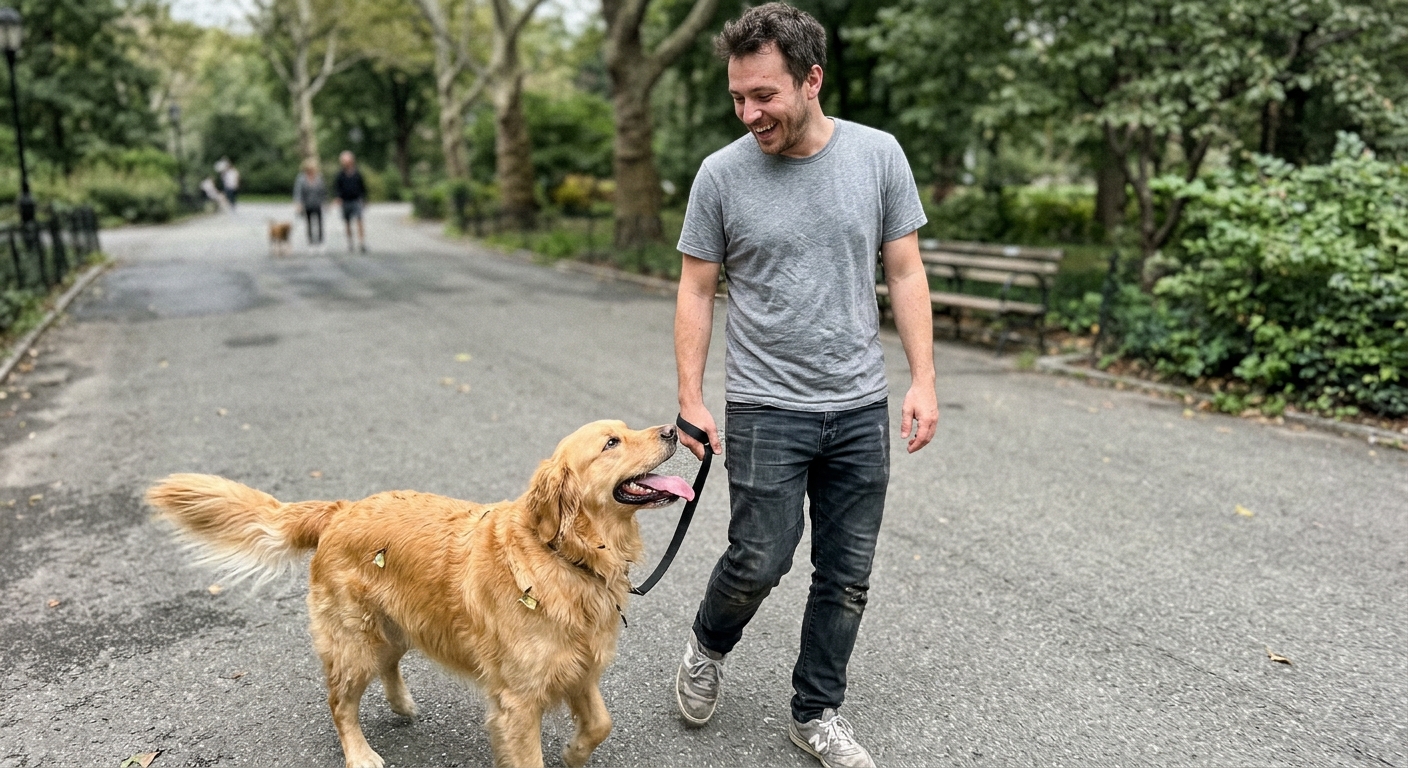
Smell: the biggest reason your dog loves walks
The nose is the main reason most dogs love walks. A dog experiences the world largely through smell, and a walk is where most of the new information is.
When your dog stops at a lamp post or a patch of grass, it is reading. It can pick up which dogs passed by, how recently, and often something about their health and mood. Leaving its own scent is a reply. To us it looks like a pause. To your dog it is the best part of the route.
Sniffing also seems to make dogs feel more positive. In a study by researchers at Barnard College, dogs that took part in scent work showed more optimistic behaviour than dogs that did heel work instead (Purdue University Center for Animal Welfare Science). Letting your dog sniff is not wasting walk time. It is giving your dog what it came for.
If you want to know what this does for your dog’s body and behaviour over time, our guide to the health benefits of walking your dog every day explains it in detail.
Other reasons dogs love going on walks
Walks let dogs follow their instincts
Long before dogs lived on sofas, their ancestors spent much of the day moving, searching and exploring. That drive has not disappeared. Walking, sniffing out a trail and checking the edges of a familiar area satisfy instincts your dog cannot act on inside your home.
A walk is time with you
For many dogs, the walk is the longest stretch of focused time they get with their owner. You are side by side, moving together, with fewer distractions than at home. Dogs are social animals and that shared time builds trust. It is also why many dogs enjoy walks less when they are rushed or when the person holding the lead is on the phone the whole time.
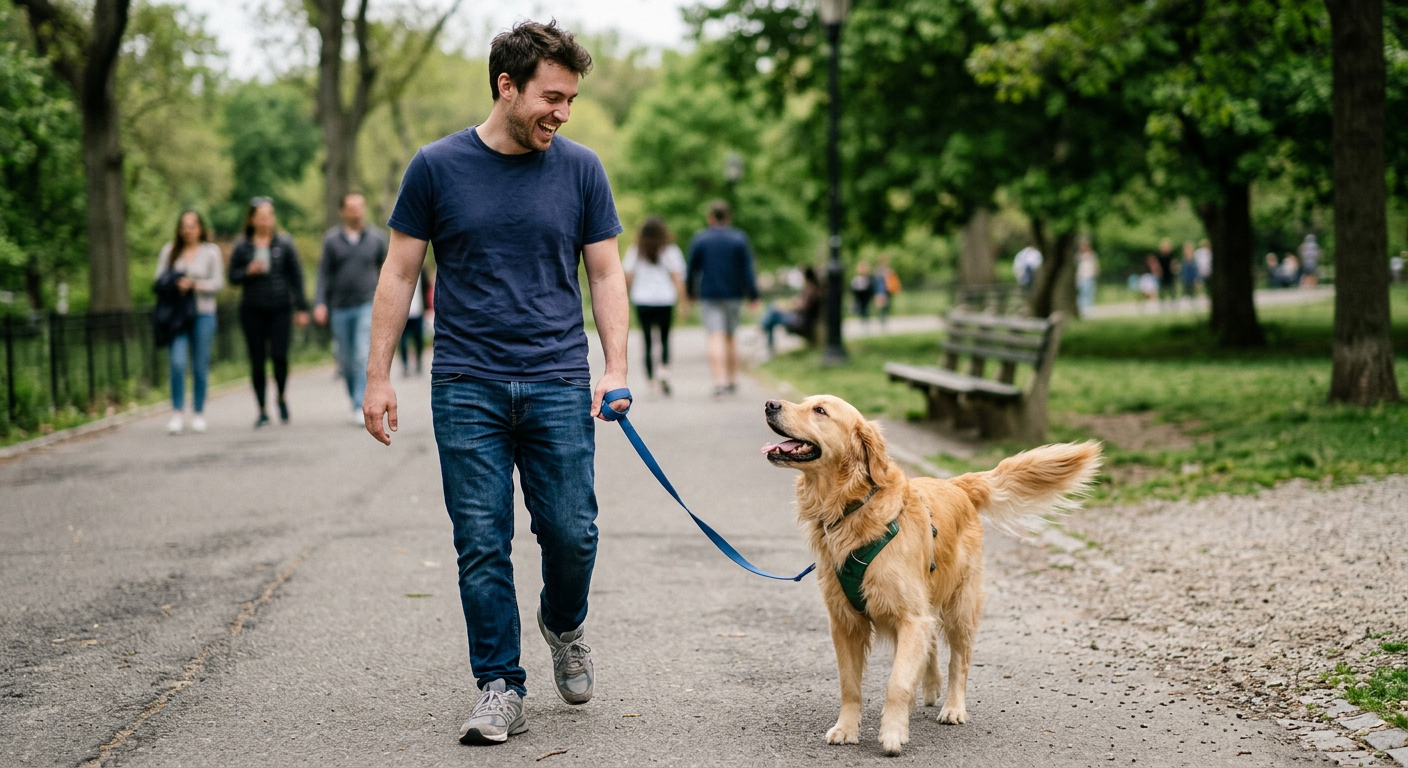
Moving simply feels good
A dog that has been resting for hours has energy to spend. A steady walk loosens muscles, lifts mood and lets your dog burn off restlessness that would otherwise come out as chewing or barking at home.
Walks are a chance to see the world
Watching people, seeing other dogs and hearing traffic and birds all give your dog information about its surroundings. Calm, positive outings help dogs stay relaxed around everyday sights and sounds.
Walks give the day a rhythm
Dogs feel secure when good things happen at roughly the same times. A walk after breakfast and another in the evening gives your dog’s day a shape it can count on, which helps it settle in between.
What your dog is telling you on a walk
Your dog’s behaviour on a walk shows you which reasons matter most to it. Use this table to read what you see and respond to it.
| What your dog does | What it usually means | How you can respond |
|---|---|---|
| Stops to sniff often | It is gathering information and enjoying the outing | Allow sniff breaks, especially on part of the walk |
| Pulls toward one spot | Something interesting is there | Walk toward it calmly when safe, rather than tugging back |
| Looks back at you | It is checking in with you | Praise it, this is a habit worth building |
| Rolls in the grass | It enjoys the texture or a scent | Check the spot is clean and let it enjoy a moment |
| Zooms or bounces at the start | It has been saving up energy | Start with a few brisk minutes before a slower pace |
| Slows down near home | It wants the walk to last | Add a short loop or a sniff break before going in |
| Lags behind or sits down | It may be tired, hot, sore or uneasy | Shorten the walk and watch for a pattern |
How to make walks your dog loves even more
Match the walk to what your dog enjoys most, and every outing becomes more rewarding without having to be longer.
| If your dog loves… | Try this on your walks |
|---|---|
| Sniffing | Give it a “sniff time” cue and let it lead for five to ten minutes |
| Exploring | Change your route once or twice a week, even by a single street |
| Moving | Add short bursts of brisk walking or a game of fetch in a safe area |
| Time with you | Put your phone away and practise one fun trick along the way |
| Watching the world | Sit on a bench together for a few calm minutes |
| Routine | Keep walk times steady, even on busy days |
How long and how often your dog walks matters too. Our guide on how often you should walk your dog helps you set the right routine for your dog’s age and energy.
What if your dog doesn’t seem to love walks?
A dog that hesitates at the door, freezes outside or wants to turn back usually has a reason. Most of the time it can be found and fixed.
Work through this checklist:
- Pain or discomfort. Stiffness, sore paws or joint problems can make walking unpleasant. Your vet should check any sudden change.
- Fear. Loud traffic, a past bad experience or a busy street can make the outside world feel unsafe. Start in quieter places and build up slowly with treats and praise.
- Equipment. A tight collar or a harness that rubs can turn every step into a bad experience. Check the fit regularly.
- Heat or weather. Hot pavement and heavy rain put many dogs off walking. Choose cooler times and softer ground.
- Age. Older dogs often prefer shorter, slower walks. A gentler route can bring back their enjoyment.
- Reactions to other dogs or people. If your dog barks, lunges or stiffens on walks, read our guide on the common causes of dog reactivity before the habit grows.
Go back to what your dog does enjoy, even if that means short, sniffy walks for a while. Confidence grows from good experiences, not from longer ones.
Keeping the walks your dog loves going every day
Your dog loves walks because they feed its nose, its instincts, its body and its bond with you. The more a walk gives your dog the parts it enjoys most, the calmer and more content it is at home.
When long days get in the way, a professional dog walker can keep that daily outing on time. Pawland’s dog walkers meet you and your dog before the first walk and share their live location during every walk. If you want your dog’s walks covered on busy days, you can book a Pawland dog walker and keep the routine your dog looks forward to.