

Pet boarding is a professional service where your pet stays overnight or for an extended period at a specialized facility when you are unable to care for them at home. Unlike pet sitting, where a caregiver comes to your residence, boarding involves taking your animal to a dedicated property such as a kennel, pet hotel, or veterinary clinic.

Where Pet Boarding Takes Place
Pet boarding takes place in secure, supervised facilities such as kennels, pet hotels, veterinary clinics, or cage-free home environments, where pets receive lodging, food, exercise, and social interaction while owners are away. Many providers also offer in-home pet sitting, where a professional cares for your pet at home, including feeding, playtime, medication (if needed), and regular updates for peace of mind.
What Happens to Dogs During Boarding
During boarding, dogs are housed in a secure facility, following a structured daily routine that includes feeding, supervised exercise, and often playtime with other dogs. While some pets thrive on this socialization, others may experience stress, anxiety, or reduced appetite due to the unfamiliar environment. Facilities typically provide constant monitoring and staff interaction.
Who Takes Care of Your Pet During Boarding?
Pet boarding, whether at a specialized facility, pet hotel, or veterinary office, is managed by trained staff, including kennel attendants, veterinary technicians, or pet sitters, who provide 24-hour care, feeding, exercise, and safety monitoring. These professionals ensure pets receive meals, exercise, social interaction, and, in some cases, veterinary attention.
Who is a Pet Sitter?

A pet sitter is a professional or individual hired to care for pets in their own home while the owner is away, providing services like feeding, walking, playtime, and medication administration. They offer a personalized alternative to boarding, ensuring pets maintain their daily routines in a familiar environment.
How Long Can a Pet Stay in Boarding?
Most healthy pets can comfortably stay in professional boarding for two to four weeks. While some, especially those with high anxiety, might struggle after two weeks, many adapt well, particularly if the facility provides adequate exercise, stimulation, and care. Long-term boarding is possible for several months with proper facilities.
How Does Pet Boarding Work?
Pet boarding serves as a secure, supervised, and temporary lodging facility for pets, providing daily care, food, and shelter while owners are away. Pets are housed in private kennels, runs, or suites, with staff following specific routines for feeding, medication, and playtime to minimize stress.
How the Process Works
- Booking & Requirements: Reservations are made, and facilities typically require proof of up-to-date vaccinations (including rabies and Bordetella) for safety.
- Check-in: You drop off your pet, often bringing their own food to avoid digestive issues, along with familiar items like toys or blankets to help them feel comfortable.
- Daily Routine: Pets receive regular care, including meals, water, potty breaks, and exercise.
- Activity Options: Depending on the facility, this can range from basic boarding to luxury, including add-ons like extra walks, playtime, grooming, or behavioral training.
- Supervision: Qualified staff monitor pets for health and behavior, with some facilities offering 24/7 monitoring or live webcams
Types of Pet Boarding
Pet boarding options include traditional kennels, luxury pet hotels, veterinary clinics, in-home, and specialized daycare, offering various levels of care, socialization, and supervision for pets while owners are away. Options range from basic, structured kennel runs to premium, spa-like environments with personalized attention and specialized medical care.
1. In-Home Pet Boarding
In-home pet boarding is a type of pet care where your dog, cat, or other pet stays in a caregiver’s home instead of a traditional kennel or boarding facility. It’s like sending your pet to stay with a trusted sitter who lives full-time in their house, often giving your pet more attention, comfort, and a home-like environment while you’re away.

2. Traditional Kennels/Catteries
Traditional kennels and catteries are established boarding facilities providing secure, supervised, short-to-long-term accommodation for dogs and cats, particularly during owner holidays. They offer individual, separated spaces for pets, ensuring safety, daily feeding, and exercise, with some offering specialized care or socialization options.
3. Luxury Pet Hotels/Resorts
Luxury pet hotels and resorts offer high-end, cage-free boarding, featuring amenities like private suites with TVs, specialized, climate-controlled play areas, 24/7 supervision, spa services, and gourmet menus. Top-tier, seven-star facilities include options such as Urban Tails (Dubai) and K9 Resorts (US), ensuring maximum comfort and security
4. Veterinary Boarding
Veterinary boarding provides professional, supervised overnight care for pets, offering a safer alternative to standard kennels, especially for animals needing medication or specialized monitoring. These facilities often include daily, on-site veterinary check-ups, secure individual cabins, and experienced staff trained in animal health and behavior.
5. Dog Daycare/Boarding
Dog daycare provides short-term, daytime care with socializing, exercise, and structured play, while boarding offers overnight, long-term accommodation. Key options range from specialized veterinary facilities for pets with medical needs to luxury pet resorts with cameras, playgroups, and grooming services.
6. Board and Train
Board and train, often called “doggie boot camp,” is an intensive, immersive program where a pet lives with a professional trainer for 1–4 weeks for fast, 24/7 obedience training or behavioral modification. It is ideal for solving issues like reactivity, anxiety, or pulling, as well as for busy owners or during vacations
Why Most UAE Pet Owners Prefer In-Home Pet Boarding
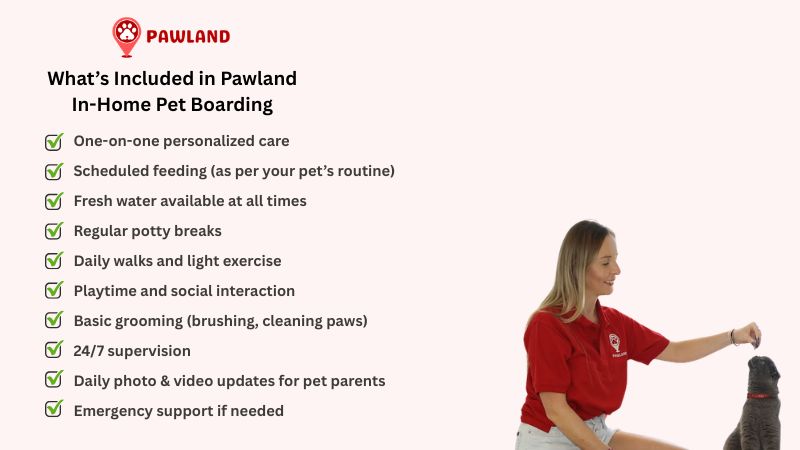
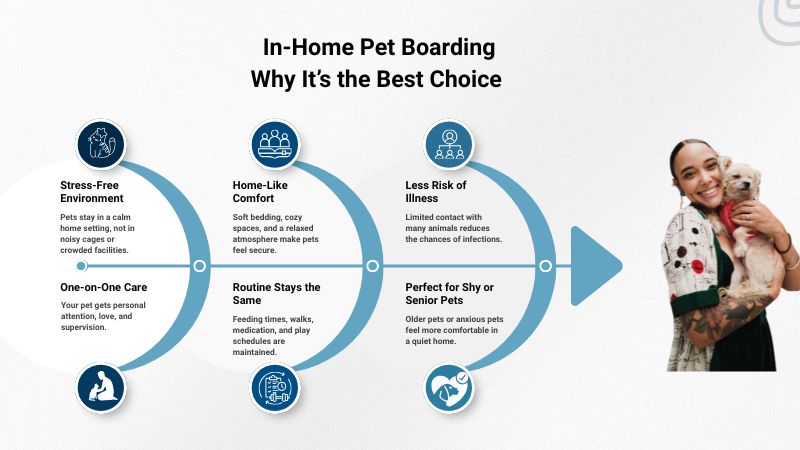
In-home pet boarding is preferred by most UAE pet owners to minimize pet stress, as it keeps pets in a familiar, air-conditioned environment with personalized, one-on-one care rather than crowded kennels. This method ensures consistent routines, reduces exposure to illness, and offers professional, attentive sitters tailored to individual needs.
Key Reasons for Choosing In-Home Boarding in the UAE:
- Reduced Stress & Familiarity: Pets stay in a comfortable, familiar environment (the owner’s home or a “home-like” setting), reducing anxiety from environmental changes, a crucial factor for comfort.
- Individualized Care & Attention: Unlike busy kennels, in-home sitters offer one-on-one attention, ensuring tailored care, playtime, and companionship.
- Consistent Routines & Diet: Feeding, walking, and medication schedules are maintained, which helps prevent digestive issues and anxiety.
- Health & Safety: In-home care significantly lowers the risk of exposure to infections and illnesses common in high-density boarding facilities.
- Specialized Care in UAE Climate: Due to the extreme heat in the UAE, in-home sitters ensure pets stay comfortably indoors with consistent air conditioning.
- Added Security & Convenience: Pet sitters can provide home security checks, such as watering plants or managing the home, providing extra peace of mind.
- Constant Supervision & Bonding: Dedicated, cage-free care allows for bonding and constant monitoring, which helps in quickly identifying any health or behavioral changes.
In-home services, including pet sitting and specialized, small-scale, in-home boarding, are seen as a safer, more loving alternative, often allowing pets to be treated as part of the family while their owners travel.
In-Home Pet Boarding vs Pet Boarding
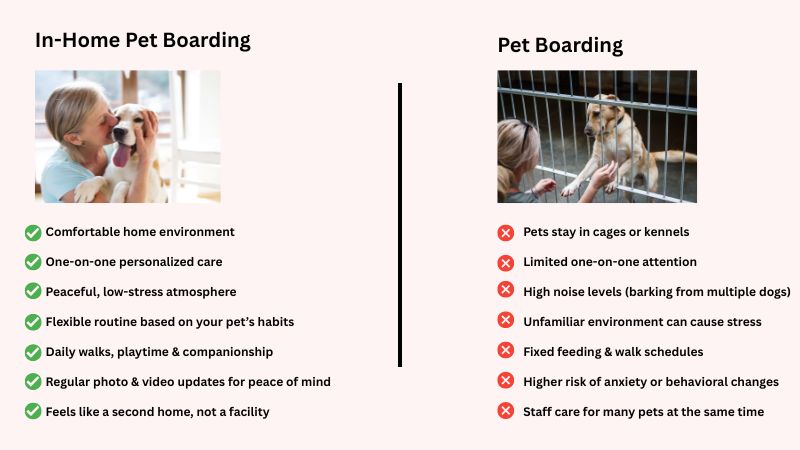
In-home pet boarding offers a familiar, low-stress environment with personalized, one-on-one care, making it ideal for anxious, elderly, or routine-oriented pets. Conversely, traditional pet boarding facilities provide 24/7 professional supervision, structured socialization, and specialized care, which are best for high-energy or social animals
In-Home Pet Boarding
- Home-style, calm environment
- Personalized feeding and medication schedules
- One-on-one attention and customized care
- Flexible routines based on the pet’s habits
- Lower exposure to large groups of animals
- Comfortable setting for anxious, senior, or shy pets
- Can include overnight stays in a caregiver’s home or scheduled home visits
- Supervision level depends on the sitter’s availability
- Quality varies based on the caregiver’s experience
If you’d like to explore more in-depth details about how pets receive care in in-home boarding, including daily routines, supervision, and personalized attention, you can read this detailed guide:
Pet Boarding
- Dedicated boarding facility with staff
- Structured daily schedule for feeding and exercise
- 24/7 on-site supervision in many facilities
- Secure, enclosed, and climate-controlled spaces
- Group play and social interaction opportunities
- Care follows facility routines rather than fully customized schedules
- Busier environment with multiple pets staying together
- Suitable for social and high-energy pets
UAE’s No. 1 In-Home Pet Boarding Service
In-home pet boarding in the UAE typically refers to two types of services: the pet staying at a verified sitter’s home (home boarding) or a professional sitter staying at the owner’s residence (live-in/overnight sitting). Based on ratings and professional certifications, here is one of the top-rated in-home pet care providers in the UAE
Pawland

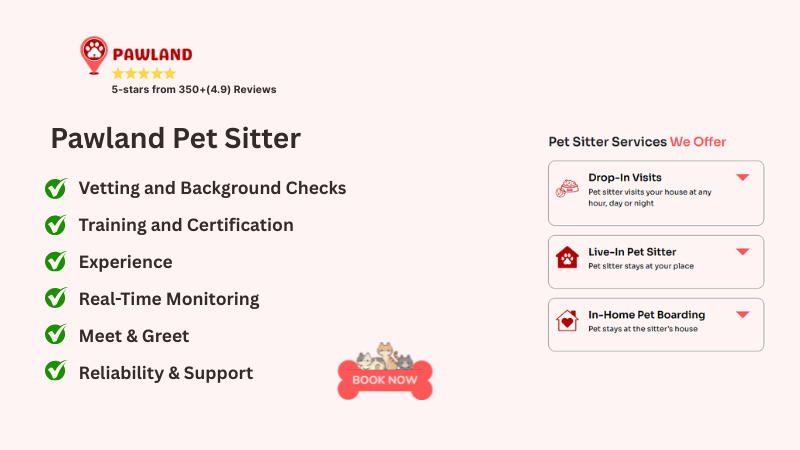
Pawland is an award-winning, licensed pet-sitting company that operates across the UAE, including Dubai, Abu Dhabi, and Sharjah. They offer a “cage-free” alternative to traditional kennels by providing a curated network of over 350 certified sitters.
- Services: Offers in-home boarding (pet stays at the sitter’s house), live-in sitters (sitter stays at owner’s house), and daily drop-in visits.
- Features: All sitters undergo a strict background check and background verification. Owners receive daily photo and video updates via WhatsApp.
- Reputation: Voted #1 by pet owners in Dubai with a 4.9/5 rating and a 94% repeat booking rate.
What services are included in Pet Boarding?
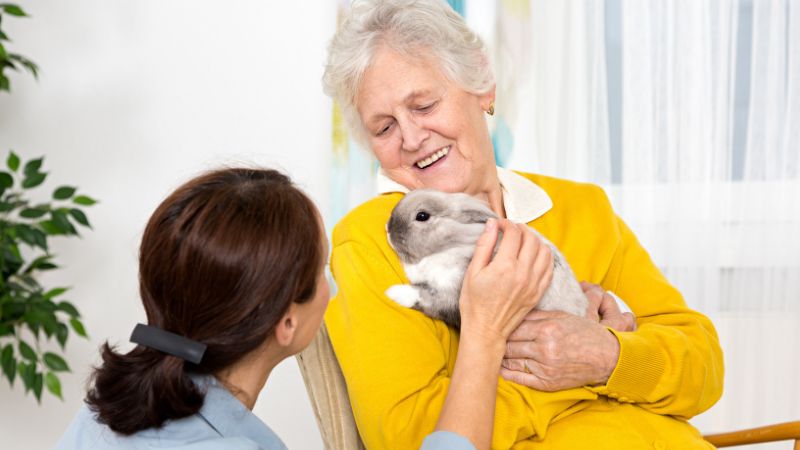
Pet boarding services typically include secure overnight accommodation, scheduled feeding, fresh water, and regular supervised potty breaks or exercise. Most facilities ensure daily care and supervision from trained staff to manage pets’ comfort. Basic amenities often feature private or shared kennels and comfortable bedding.
Key services and amenities included in standard pet boarding:
- Feeding and Fresh Water
- Exercise and Playtime
- Sleeping Arrangements
- Medication Administration
- Grooming Add-On Services
- Behavioral Monitoring
- Overnight Supervision
Benefits of Pet Boarding
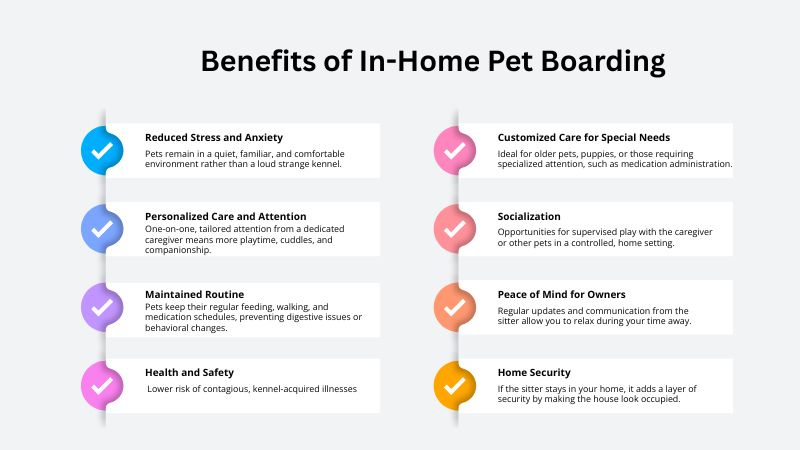
Pet boarding offers significant benefits for both pets and owners, including professional supervision, structured socialization, and consistent care. Pets enjoy a secure environment with exercise, specialized care for dietary or medical needs, and reduced separation anxiety, while owners gain peace of mind knowing their companions are safe and happy.
Key Benefits of Pet Boarding
- Professional Care & Safety: Facilities provide 24/7 supervision, secure environments, and often have staff trained to handle emergencies or administer medication.
- Socialization and Play: Pets, particularly dogs, get to interact with other animals and people, reducing loneliness and improving social skills.
- Routine and Exercise: Structured environments ensure pets stick to their feeding schedules and receive regular exercise, preventing boredom.
- Mental Stimulation: Engaging activities and new environments keep pets mentally stimulated, reducing anxiety.
- On-Call Medical Support: Many facilities have veterinarians on duty or on call, ensuring immediate care if needed.
- Convenience: Services like grooming and training are often available, adding extra value to the stay.
Pet Boarding Requirements
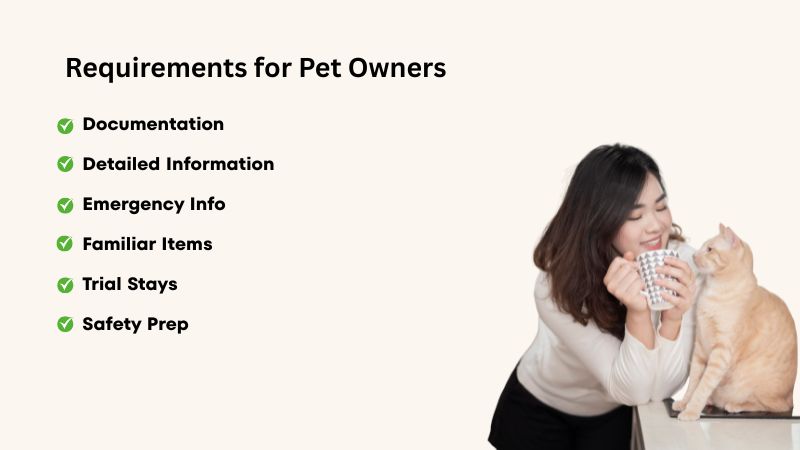
Pet boarding typically requires proof of up-to-date vaccinations (Rabies, Distemper, Parvovirus, and Bordetella), a recent veterinary check-up, and proof of flea/tick prevention. Facilities often require temperament screenings for social play, signed liability waivers, emergency contact information, and specific instructions for medication or food.
Key Health & Safety Requirements
- Vaccinations: Almost all facilities require proof of vaccinations for Rabies, DA2PP (Distemper, Adenovirus, Parainfluenza, Parvovirus), and Bordetella (kennel cough).
- Parasite Control: Flea and tick prevention must be active.
- Health Check: A Veterinary check-up within 2-3 weeks prior to boarding is recommended to ensure the pet is fit for boarding.
- Medication: Medications must be in original containers with clear instructions.
Behavioral & Administrative Requirements
- Temperament Check: Many boarding facilities require a pre-boarding evaluation to ensure the dog is comfortable with social play and not aggressive.
- Age/Health Restrictions: Some facilities may not accept puppies under a certain age or pets with severe, unmanaged medical conditions.
Risks and Challenges of Pet Boarding
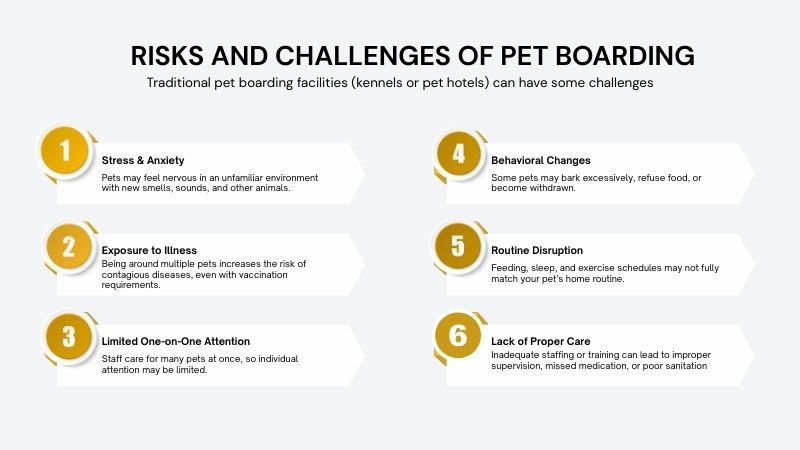
Pet boarding is a necessary service for many pet owners, but it comes with several risks and challenges that can impact a pet’s physical and emotional well-being. Common issues include high stress levels, increased exposure to contagious diseases, and behavioral changes resulting from a disruption in routine and environment.
1. Stress and Anxiety
Boarding can cause anxiety, especially for pets not used to being away from home. Signs may include digestive issues, barking, pacing, or withdrawal. Stress from unfamiliar environments and separation can also lower immunity.
2. Exposure to Illness
Shared boarding spaces increase the risk of contagious diseases like kennel cough or canine influenza. Even with vaccination requirements, some health risks remain.
3. Adjustment Period
Pets often need a few days to adjust to a new environment. During this time, they may seem withdrawn, stressed, or lose their appetite.
4. Behavioral Changes
Routine disruption can lead to temporary changes such as clinginess, hyperactivity, or minor training regression after returning home.
Reasons to Board Your Pet
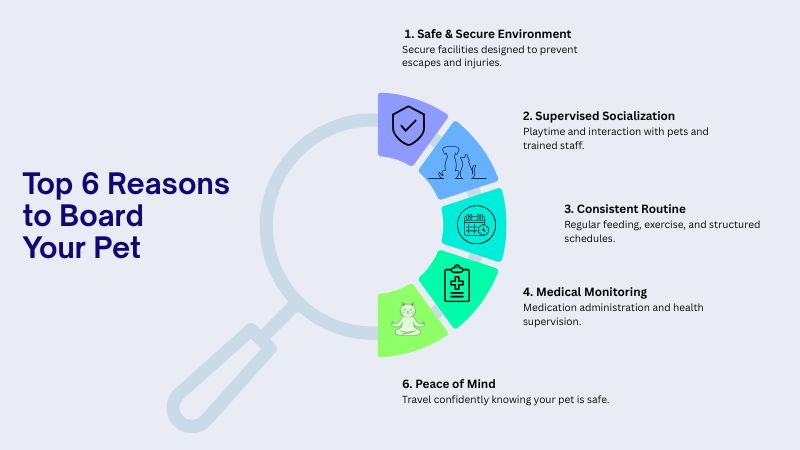
Boarding your pet provides a safe, structured, and supervised environment while you are away, ensuring they receive proper care, socialization, and playtime rather than being left alone or in a stressful environment. It offers peace of mind through professional care, regular exercise, monitored feeding, and medication administration.
Key reasons to board your pet include:
- Supervised Socialization: Pets can play, interact, and build social skills in a safe environment with other animals and trained staff.
- Safety and Security: Facilities are designed to be secure, preventing escapes and reducing the risk of injury, especially during chaotic situations like home moves.
- Professional Care & Routine: Pets maintain a consistent routine for feeding and exercise, reducing stress and anxiety.
- Medical Monitoring: Trained staff can monitor for health issues and administer medication, which is particularly beneficial for senior pets or those with chronic conditions.
- Mental Stimulation: Engaging, high-energy activities prevent boredom and loneliness.
- Peace of Mind: Owners can enjoy their travel knowing their pet is safe and well-cared for.
Boarding facilities also often provide extra services like grooming and, in some cases, remote, web-based cameras.
Choosing the Right Boarding Services
Choosing the right boarding service involves matching your pet’s temperament and health needs with a facility’s specialized environment.
- In-Home Boarding: Recommended for anxious, senior, or small pets. Your pet stays in a private home, providing a familiar atmosphere and more one-on-one attention.
- Traditional Kennels/Catteries: Best for independent pets. These facilities offer structured routines, professional supervision, and socialization opportunities.
- Luxury Pet Resorts: Ideal for pets that enjoy extra attention. They feature high-end amenities like climate control, spacious suites, webcams, and grooming services.
- Veterinary Boarding: Necessary for pets with medical conditions or those requiring regular medication. These are managed by medical staff equipped for health emergencies.
Choosing the Right Pet Sitter for Boarding
Choosing the right in-home pet sitter involves interviewing candidates for experience with your pet’s needs, verifying references, and ensuring they are insured/bonded. Conduct a meet-and-greet to observe interactions, ask about emergency protocols, and require daily updates (photos/notes). For best results, use trusted platforms or referrals, and consider a trial stay.
Key Steps to Choosing a Pet Sitter
- Check Google Reviews: Read verified pet owner reviews on Google Business Profile (GMB) to ensure the sitter is reliable, experienced, and trusted for in-home boarding.
- Background Checks: Ask about their experience with your pet’s breed, specialized needs (medication), and their approach to emergencies. Verify if they are bonded, insured, and have a clear background check.
- Arrange a Meet & Greet: Schedule a Meet & Greet to observe how the sitter interacts with your pet at home. A good in-home boarding sitter should be calm, attentive, and confident in handling your pet’s personality and routine.
- Discuss Communication & Routine: Establish clear expectations for daily updates, photos, and adherence to your pet’s feeding/walking schedule.
- Look for Red Flags: Be cautious of inconsistent communication, inability to provide references, or a lack of interest in your pet’s specific needs.
Essential Questions to Ask
- What is your experience with [pet breed/special need]?
- What is your plan if my pet has an emergency?
- Will you provide daily updates or photos?
- Are you insured and bonded?
- How do you handle pets with behavioral issues or anxiety?
Preparing Your Pet for Boarding
Prepare your pet for boarding by ensuring all vaccinations (including kennel cough) are up-to-date at least 7–14 days in advance, providing parasite protection, and scheduling a vet check-up. Pack familiar items like blankets or toys, along with detailed instructions for medication, feeding, and emergency contact information, to reduce stress and ensure a comfortable, safe stay.
For the Pet – Physical & Emotional Readiness
- Health & Vaccinations: Confirm your pet is up-to-date on core vaccinations (Rabies, Distemper/Parvo) and kennel-specific ones like Bordetella (kennel cough). Visit your veterinarian 2–3 weeks early for a check-up and to ensure parasite prevention (fleas/ticks) is current.
- Trial Stays: Schedule a “trial” daycare day or a single overnight stay. This teaches your pet that you will return and helps them acclimate to the new smells and staff.
- Routine Matching: Gradually adjust your pet’s feeding and exercise times at home to mirror the boarding facility’s schedule.
- Pre-Departure Exercise: Give your pet a long walk or vigorous play session on the morning of drop-off to burn off nervous energy.
For the Owner – Peace of Mind
- Research & Visit: Tour the facility in person. Check for cleanliness, secure fencing, noise levels, and how staff interact with the animals.
- Brief Goodbyes: Keep your departure under 30 seconds. Long, emotional farewells spike your pet’s cortisol and signal that something is wrong.
- Trust the Staff: Once you’ve chosen a reputable facility, trust their expertise. Limit check-ins to once a day or use the provided “Pupdates” to avoid heightening your own anxiety.
- Honesty: Be fully transparent with staff about behavioral quirks, such as fear of loud noises, resource guarding, or separation anxiety.
Pet Boarding Checklist
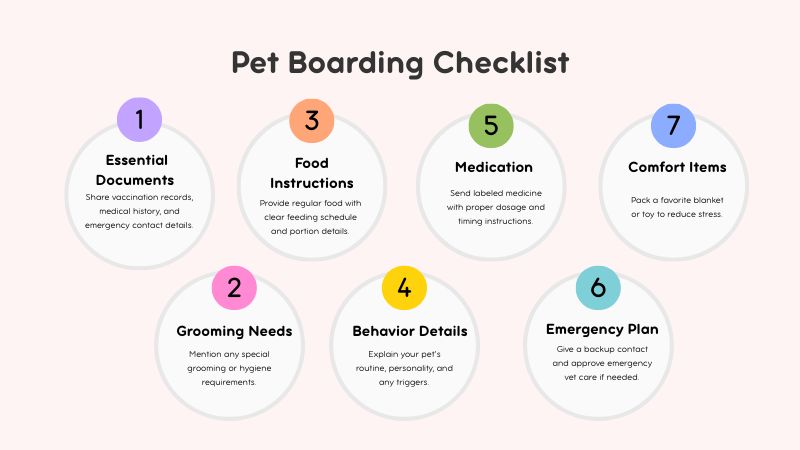
A comprehensive pet boarding checklist ensures your pet stays safe, healthy, and as stress-free as possible while you are away. Use this organized list to prepare for their “staycation.”
1. Health & Medical Requirements
- Up-to-Date Vaccinations: Most facilities require proof of Rabies, Distemper (DHPP/FVRCP), and Bordetella (Kennel Cough).
- Parasite Prevention: Ensure your pet has recently been treated for fleas, ticks, and worms.
- Medications: Pack all prescriptions in their original containers with clear dosage instructions.
- Medical History: Provide a summary of any chronic conditions, allergies, or recent surgeries.
2. Essential Packing List
- Regular Food: Pack enough for the entire stay plus 2–3 extra days in case of delays.
- Feeding Instructions: Include a written guide on portion sizes and specific meal times.
- Comfort Items: A favorite toy, blanket, or an old T-shirt that smells like you can significantly reduce separation anxiety.
- Walking Gear: Bring a sturdy leash, a properly fitted collar, and a harness if they use one.
- ID Tags: Ensure tags are readable and include your current phone number.
3. Emergency Contact Information
- Your Contact Info: Provide your travel itinerary and how to reach you directly.
- Local Emergency Contact: A friend or family member who can make decisions if you are unreachable.
- Veterinarian Details: Name and number of your regular vet and a preferred 24/7 emergency clinic.
4. Behavioral & Routine Notes
- Daily Schedule: Detail when they usually walk, nap, and play to maintain their routine.
- Quirks & Triggers: Inform staff if your pet is scared of loud noises (thunder, fireworks) or is reactive to other animals.
- Social Preferences: Clarify if your pet enjoys group play or prefers one-on-one attention from humans.
5. Final Check Before Drop-Off
- Label Everything: Use a permanent marker to put your pet’s name on food bags, toys, and bedding.
- Trial Stay: If your pet is anxious, consider a one-night trial run before a long trip.
- Short Goodbye: Keep your departure calm and brief to help prevent your pet from getting overly excited or stressed
What to Bring When Boarding Your Pet
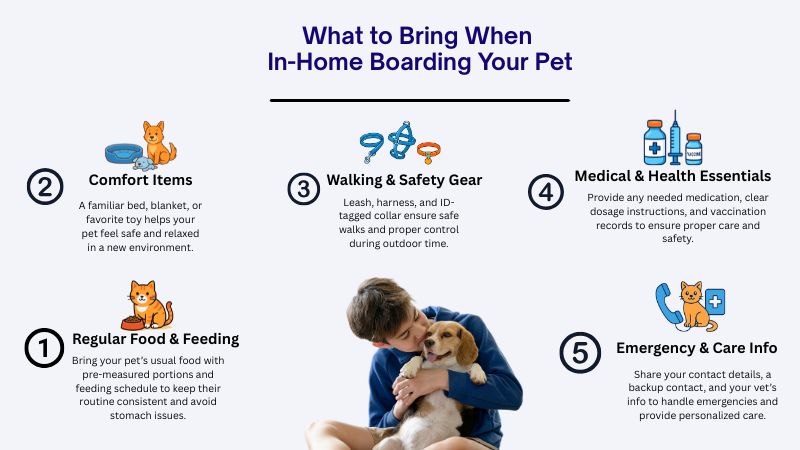
When boarding your pet, bring their regular food, favorite toys, familiar bedding, and any necessary medications with clear instructions. Essential items also include emergency contact details, up-to-date vaccination records, and a secure leash. Packing these items ensures your pet stays comfortable, healthy, and safe.
1. Food and Treats
- Bring enough of your pet’s regular food to last the entire stay, plus extra in case of delays.
- Consistent food prevents digestive upset from sudden diet changes.
- Bring favorite treats for comfort and rewards.
2. Favorite Toys
- Pack familiar toys or puzzle feeders to keep your pet entertained and reduce stress.
- A familiar item with your scent can help them feel more at home.
3. Bedding or Blanket
- Bring a bed, blanket, or unwashed t-shirt to provide comfort and familiarity in a new environment.
- Check if the facility has size or material restrictions.
4. Medication and Instructions
- Provide all medications in their original containers with clear, written dosage and frequency instructions.
- Include details on any special routines or, if applicable, dietary restrictions.
5. Emergency Contact Information
- Leave your phone number and a trusted alternative contact.
- Include your veterinarian’s name, phone number, and any relevant medical history.
- Bring copies of up-to-date vaccination records (e.g., bordetella, rabies, DHPP)