



Planning your cat’s meals may seem simple, but one question continues to confuse many pet owners: How many meals does a cat actually need each day? Some people leave dry food out all day, while others stick to one or two scheduled meals. With so much conflicting advice online, it’s easy to wonder which approach is truly best.
The truth is that the quality of your cat’s food isn’t the only thing that matters, meal frequency can also influence their health. While factors like genetics, diet, exercise, and environment all play important roles, recent research suggests that how often a cat eats may affect their weight, digestion, and overall well-being more than many owners realize.
The Most Common Feeding Method: Free Feeding
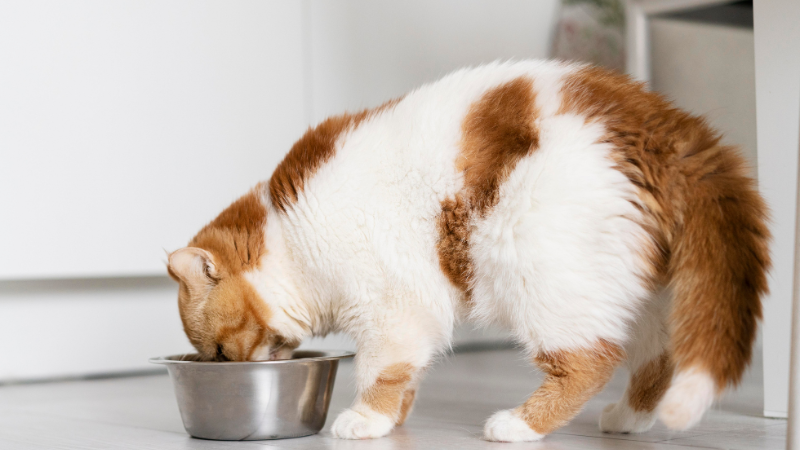
For many households, free feeding is simply the easiest option. You fill a bowl with dry food, leave it available throughout the day, and refill it whenever it becomes empty. Your cat eats whenever they feel hungry, and you don’t have to worry about sticking to a strict feeding schedule.
One of the biggest concerns with free feeding is that it often encourages cats to eat more than they actually need. Indoor cats spend much of their day sleeping, grooming, or relaxing, so unlimited access to food can easily lead to unnecessary snacking. Many cats don’t eat simply because they’re hungry, they also eat out of habit or boredom.
Another reason free feeding is so common is that it usually involves dry food, which can safely remain in a bowl for hours without spoiling. However, dry food is often designed to be extremely appealing. Manufacturers use flavor-enhancing ingredients, commonly known as palatants, to improve the smell and taste of the food. These coatings make dry kibble much more attractive to cats and may encourage them to keep returning to the bowl.
Is Feeding Two Meals a Day Enough?
Because many owners understand the importance of portion control, feeding two meals per day has become the standard routine.
- One meal in the morning.
- Another meal in the evening.
How Cats Naturally Eat in the Wild
Although domestic cats have lived alongside humans for thousands of years, their hunting instincts remain remarkably similar to those of their wild ancestors. Before domestication, cats survived by hunting small prey such as rodents, birds, reptiles, insects, and amphibians. Instead of eating one or two large meals, they searched for food throughout the day, catching whatever prey they could find. Even today, millions of feral cats around the world continue to live this way.
Researchers studying feral cats in Australia attached lightweight cameras to their collars to observe their daily behavior. The footage revealed that cats spent much of their time resting, grooming, and exploring. However, they also hunted regularly throughout the day. Interestingly, researchers found that each cat caught an average of 7.2 prey animals daily, although not every catch was eaten. On average, the cats consumed roughly five small meals each day.
Rather than eating large portions at fixed times, cats naturally consume multiple smaller meals spread across many hours.
What Can We Learn From Wild Cats?
Of course, recreating a wild hunting lifestyle isn’t realistic for most pet owners. Very few people have the time to prepare and serve five separate meals every day. However, understanding natural feline behavior gives us a useful guideline.
Instead of relying on unlimited food or one large meal, offering several smaller meals more closely matches how cats have evolved to eat. This doesn’t mean every owner needs to feed five times a day. For most people, that’s simply not practical. A more realistic compromise is feeding three measured meals throughout the day.
Why Three Meals Can Be a Great Balance
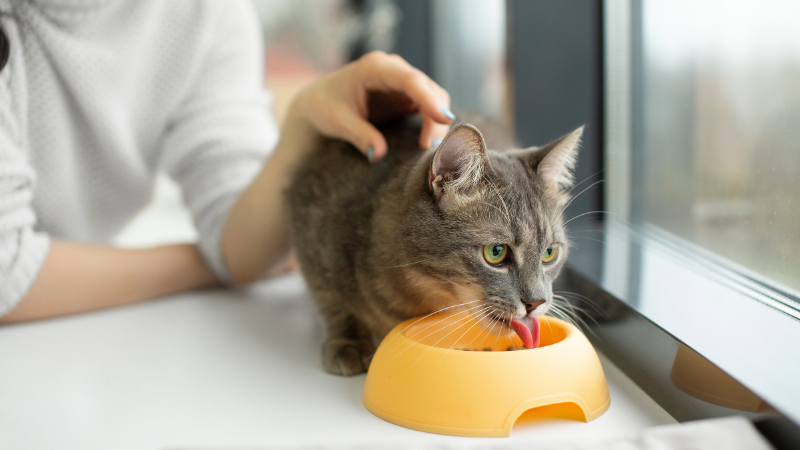
For many healthy adult cats, three smaller meals provide an excellent balance between practicality and natural behavior. If your cat currently eats breakfast and dinner, consider adding a smaller third meal before bedtime. The total amount of food stays exactly the same, you’re simply dividing it into smaller portions.
For example, if your cat normally eats six ounces of food per day, you could divide that into three equal meals of two ounces each. Many owners find this routine helps their cats stay satisfied for longer, reduces begging between meals, and better reflects their natural instinct to eat several small meals rather than one or two large ones. Some studies have also suggested that multiple smaller meals may encourage greater daily activity, which can help support healthy weight management.
Every Cat is Different
While three meals may work well for many adult cats, there’s no single feeding schedule that’s perfect for every pet. A growing kitten has very different nutritional needs than a senior indoor cat. Likewise, highly active cats may require different calorie intake than cats that spend most of the day relaxing indoors. Medical conditions, medications, and veterinarian recommendations should always take priority over general feeding advice.
The goal isn’t to copy wild cats exactly, it’s to build a routine that keeps your own cat healthy, maintains a consistent body weight, and fits comfortably into your daily schedule.