



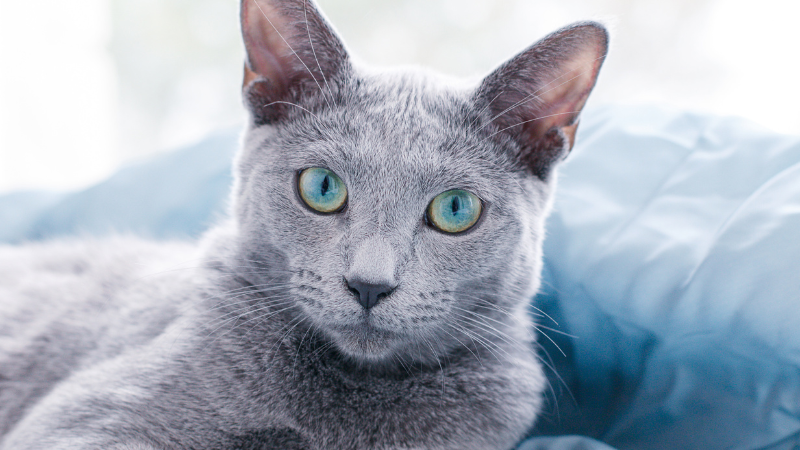
The Russian Blue is a quiet, gentle cat with a silver-blue double coat and bright green eyes. It is loyal to its family but often shy with strangers, and it feels safest when every day follows the same pattern. Good Russian Blue care means a steady routine, measured meals, a spotless litter box, weekly brushing and calm, patient handling.
This guide explains what your Russian Blue needs and why, at home and when you are away.
What Does a Russian Blue Need Every Day?
A Russian Blue needs meals at the same times, fresh water, a clean litter box, short play sessions, quiet resting spots and gentle time with its people.
A simple daily routine looks like this:
- Morning: breakfast and fresh water at the same time each day
- Daytime: quiet rest in a high or hidden spot
- Evening: a play session, dinner and a litter check
- Night: calm time near you
Good to know: Russian Blues notice small changes, such as a late meal, a moved bowl or new furniture. Keeping things the same helps them stay relaxed.
Why Is Routine So Important for a Russian Blue?
Routine matters because Russian Blues are sensitive cats that can become stressed by change.
A stressed Russian Blue may hide more, eat less, over-groom or stop using its litter box. You can help your cat feel secure by:
- Feeding and playing at the same times every day
- Keeping bowls, beds and litter boxes in the same places
- Introducing new people, pets or furniture slowly
- Giving it hiding spots, such as a covered bed or a box on a shelf
How Much Should You Feed a Russian Blue?
Feed a Russian Blue two or three measured meals a day of a complete, high-protein cat food.
Russian Blues love food and will often ask for more, even when they have eaten enough. Extra weight can lead to joint problems and diabetes, so portion control is important.
- Choose a food with real meat listed first
- Weigh dry food instead of guessing
- Include wet food for extra moisture, as many cats don’t drink enough water. Our guide to the best wet cat food can help you choose one.
- Keep treats small and count them in the day’s food
- Don’t give extra food just because your cat asks
You should be able to feel your cat’s ribs easily under a thin layer of fat.
How Do You Keep a Russian Blue Active?
You keep a Russian Blue active with one or two short play sessions a day and places to climb.
Russian Blues are playful and clever, but they prefer play with people they trust. They often enjoy chasing toys in short, quick bursts.
- Wand toys: let your cat chase, jump and pounce
- Puzzle feeders: keep its mind busy and slow down eating
- Cat trees and shelves: many Russian Blues love high, safe spots
- Fetch: some Russian Blues learn to bring back small toys
How Do You Groom a Russian Blue?
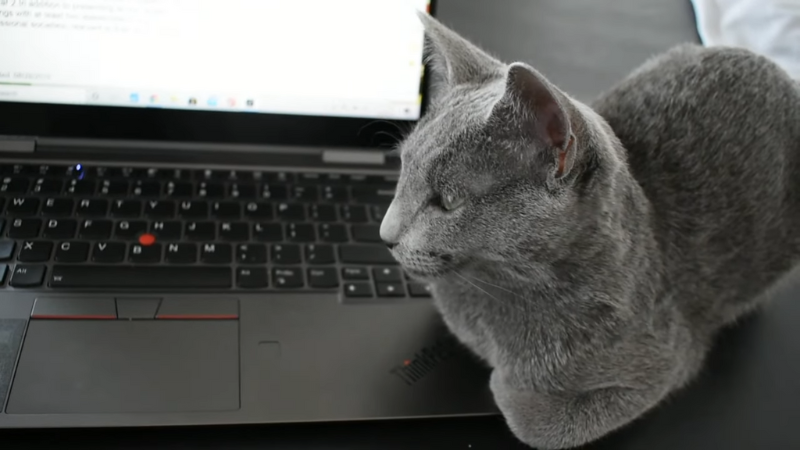
You groom a Russian Blue by brushing its short, dense double coat once a week, and a little more often when it sheds.
The coat is thick and soft, and it sheds lightly to moderately. Weekly brushing removes loose hair and keeps the coat shiny.
- Brush once a week with a soft brush or grooming mitt
- Check ears and wipe the outer part if needed
- Trim nails every two to three weeks
- Brush teeth with cat toothpaste if your cat accepts it
Russian Blues rarely need a bath.
Why Does a Clean Litter Box Matter So Much?
A clean litter box matters because many Russian Blues are fussy about hygiene and may avoid a dirty box.
- Scoop the litter box at least once a day
- Change the litter fully every one to two weeks
- Keep the box in a quiet, private place
- Use the same type of litter every time
If your cat suddenly stops using its box, it may be stressed or unwell, so speak to your vet.
What Health Problems Should Russian Blue Owners Watch For?
Russian Blues are generally healthy cats, but owners should watch for weight gain, urinary problems and dental disease.
With good care, many Russian Blues live 15 years or more.
- Weight gain: a rounder belly or less interest in play
- Urinary problems: straining, going often or blood in the urine (this needs a vet straight away)
- Dental disease: bad breath, drooling or chewing on one side
Book a vet check-up every year, and twice a year for older cats. Call your vet if your cat stops eating, hides for long periods or changes its litter habits.
Can a Russian Blue Be Left Alone?
A healthy adult Russian Blue can usually stay alone during a normal workday, as long as its routine stays the same.
Russian Blues are quite independent, but they bond closely with their people and can feel lonely or stressed with very long absences. Learning why some cats hate being left alone can help you spot early signs of stress.
- Keep meal times the same on workdays and weekends
- Leave a puzzle feeder and a few toys
- Make sure it has a quiet, cool place to rest
- Spend calm time together when you get home
Who Can Care for Your Russian Blue When You Travel?
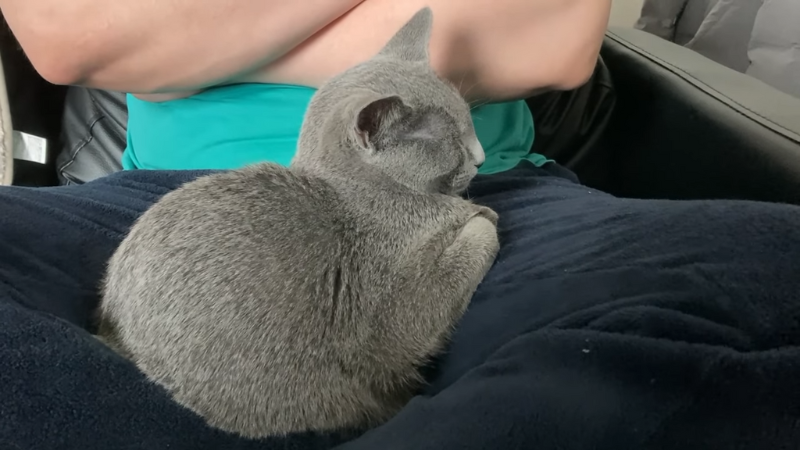
When you travel, a calm cat sitter who follows your routine at home is often the best way to care for a Russian Blue.
Because this breed is sensitive to change, staying in its own home usually feels safest. Cat sitting at home keeps your cat’s meals, litter box and quiet spots exactly as they are. With Pawland, you can share every detail of your cat’s routine before you go, including where it likes to hide.
If your Russian Blue is more relaxed with new people, cat boarding in a home setting gives it a quiet home and company instead of a busy cattery.
Helping a Shy Russian Blue Settle With a Sitter
- Ask the sitter to move slowly and speak softly
- Let your cat approach the sitter first
- Use your cat’s favourite treats or toys to build trust
- Don’t worry if it hides at first, as many shy cats come out once they feel safe
What to Tell Your Cat’s Sitter
- Exact meal times and portions
- Where your cat likes to hide and rest
- Litter routine and litter type
- Favourite toys and treats
- Your vet’s details and any medication