

A German Shepherd is loyal, clever and full of energy. It needs plenty of exercise, steady training, good food, regular brushing and lots of time with its family. In a hot climate, it also needs careful timing for walks. Below is everything your shepherd needs, and how to keep its routine going when you’re busy or away.

What Does a German Shepherd Need Every Day?
A German Shepherd needs plenty of exercise, training for its mind, measured meals, fresh water, brushing and lots of time with its family.
A simple daily routine looks like this:
- Morning: a walk before the heat, then breakfast
- Daytime: rest in a cool room, with a chew toy or puzzle
- Evening: a walk after sunset, short training and dinner
- Night: calm time with you
Keeping this routine the same every day helps your shepherd stay calm and settled.
How Much Exercise Does a German Shepherd Need?
An adult German Shepherd usually needs one to two hours of exercise a day, split into walks, play and training.
German Shepherds were bred to work, so a bored shepherd may chew, dig or bark.
- Puppies: short, gentle play sessions, as growing joints are delicate
- Adults: long walks, fetch and brain games every day
- Older dogs: slower, shorter walks, still every day
Carry water on every walk and use these tips to keep your dog hydrated during walks. On busy workdays, a dog walker who can handle a big, strong dog keeps your shepherd’s exercise on track in the cooler hours.
How Do You Keep a German Shepherd Cool in Hot Weather?
You keep a German Shepherd cool by walking it only in the cooler hours, keeping it indoors in a cool room during the day, and giving fresh water all the time.
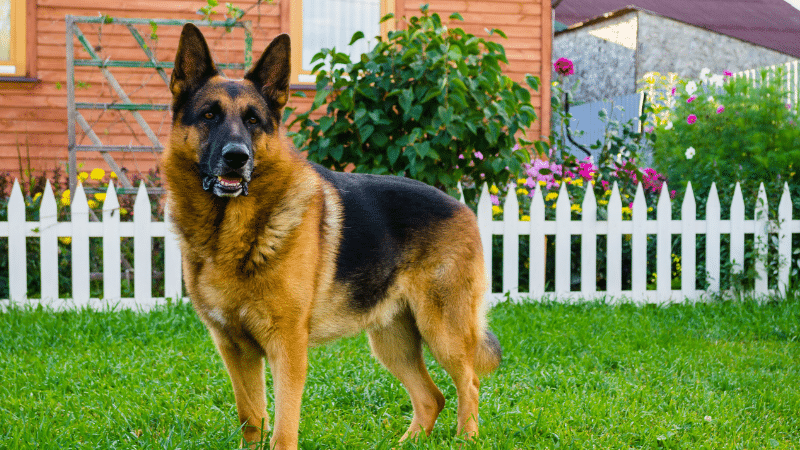
A German Shepherd’s thick double coat traps heat.
- Never walk in the midday sun
- Check the pavement with your hand before walking
- Keep your dog in a cool room during the day
- Watch for heavy panting, drooling or weakness, and call your vet if you see them
When you’re out for long hours, someone should check that the room stays cool and the water bowl is full. A sitter visiting during the day can do this and give your dog a short walk.
How Do You Train a German Shepherd?
You train a German Shepherd with short, reward-based sessions every day, starting with basics like coming when called, sit, stay and loose-leash walking.
- Keep sessions to 5 to 10 minutes
- Reward good behaviour with treats and praise
- Meet calm people and dogs early, so your dog grows up confident
- Redirect puppy nipping to a toy. These simple ways to stop puppy biting and mouthing help in the early weeks
A well-trained shepherd is calmer at home and easier for anyone to care for. Write down the commands your dog knows, so anyone who looks after it uses the same words.
What Should You Feed a German Shepherd?
Feed a German Shepherd a complete large-breed dog food, in measured meals, two or three times a day.
- Puppies: three or four meals a day of large-breed puppy food
- Adults: two measured meals a day
- Let your dog rest for an hour before and after big meals, as large dogs can get a dangerous swollen stomach (bloat) if they run around right after eating
- Never give chocolate, grapes, onions or cooked bones
How Do You Care for a German Shepherd’s Coat?
You care for a German Shepherd’s coat by brushing it two or three times a week, and every day when it sheds.
- Use an undercoat rake and a brush
- Expect heavy shedding twice a year
- Bathe only when needed
- Don’t shave the coat, as it protects your dog from heat and sun
Which Health Signs Should German Shepherd Owners Watch For?
German Shepherd owners should watch for stiffness or limping, a swollen belly and signs of heat stress.
- Stiffness, limping or trouble standing up: possible hip or elbow problems
- Swollen belly, retching or restlessness after eating: possible bloat, which is an emergency
- Heavy panting or weakness: signs of heat stress
Book a vet check-up every year, and ask about hip and elbow checks as your dog grows.
How Long Can a German Shepherd Be Left Alone?
Most adult German Shepherds can stay alone for a few hours, but long days alone can lead to barking, chewing and stress.
- Walk your dog before you leave
- Leave a chew toy or puzzle feeder
- Keep the room cool, with fresh water
- Build up time alone slowly
On long workdays, a midday walk or visit gives your shepherd exercise and company until you’re home.
Who Looks After Your German Shepherd When You Travel?
When you travel, your German Shepherd needs someone to walk it, feed it, keep its training going and give it plenty of attention.
Dog sitting at home keeps your shepherd in familiar surroundings, with its usual walks, meals and routine. At Pawland, sitters follow your dog’s routine and commands exactly as you leave them.
If your shepherd is relaxed with new people, it can also stay with a sitter through dog boarding in a home setting, with company all day instead of a kennel.
What Should You Tell Your German Shepherd’s Sitter?
Tell your sitter how much to feed, when to walk, which commands your dog knows and how to reach your vet.
- Meal times and portions
- Walk times and lead rules
- Commands your dog knows
- How it behaves with other dogs and visitors
- Your vet’s phone number