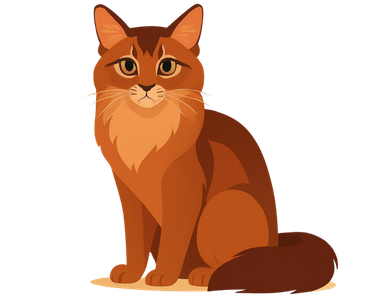


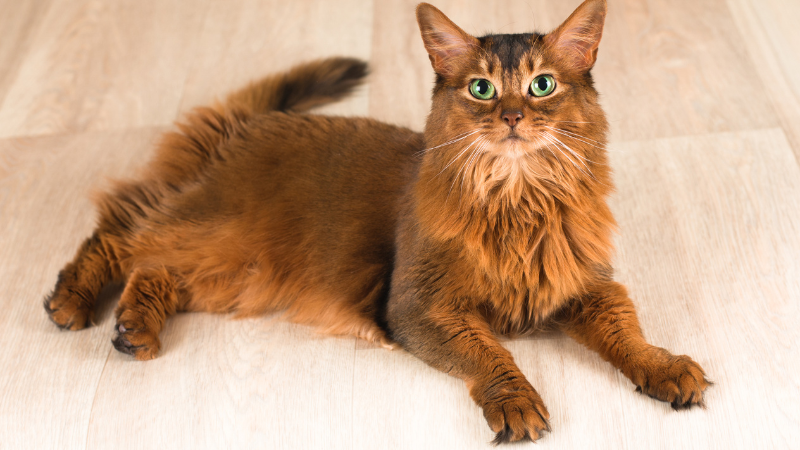
The Somali cat is an athletic, medium-sized breed recognized as the semi-longhaired version of the Abyssinian cat. Famously nicknamed the “fox cat” for its bushy tail and large ears, it features a distinctive ticked agouti coat displaying multiple bands of color on individual hairs.
The breed originated in the United States during the 1960s when breeders selectively paired Abyssinian kittens carrying a recessive longhair gene. Breeder Evelyn Mague named the cats “Somali” as a nod to Somalia, the country bordering Abyssinia (modern-day Ethiopia).
Physical Characteristics
The Somali cat is a medium-sized, athletic feline renowned for its striking, wild, fox-like appearance. They generally weigh between 6 to 12 pounds and display a well-proportioned, muscular build built on elegant lines.
- Coat and Ticking: They possess a soft, semi-long double coat that lies relatively flat. Their hallmark feature is agouti ticking, where each individual hair contains multiple alternating bands of dark and light pigmentation.
- Colors: Major color variations recognized by the Cat Fanciers’ Association (CFA) include ruddy, red, blue, and fawn.
- Head and Face: They have a modified wedge-shaped head with gentle contours. Their large, almond-shaped eyes range from green to gold or amber and are accentuated by dark lid skin that gives an eyeliner-like effect. Their large, alert ears are broad, cupped at the base, and often tufted.
- Body and Tail: Their frame is lithe, graceful, and slightly arched. They have long, slim legs ending in small oval paws with longer fur tufts between the toes. Their long, highly voluminous, plumed tail tapers gently and mimics the tail of a fox
Personality and Temperament
The Somali cat is a highly energetic, intelligent, and deeply social feline known for its vibrant and mischievous personality. Often described as the “sunshine of the house,” this breed thrives on activity and human companionship.
Key Personality Traits
- Highly Energetic: Somalis are perpetually in motion, loving to sprint, pounce, and zoom through the house.
- Intense Curiosity: Known as “preposition cats,” they explore under, over, and through every single corner of their environment.
- Expert Climbers: They possess a powerful leaping ability and prefer high perches, such as the tops of refrigerators, doors, and tall cat trees.
- Playful Mischief: If left unsupervised or under-stimulated, their boredom leads to antics like opening cabinets, knocking over items, or unraveling tissues.
Social Behavior and Compatibility
- Affectionate but Active: They form incredibly strong bonds with their owners and show immense love. However, they are generally not lap cats, as they are far too restless to sit still for long.
- Attention Seekers: They love being the center of attention and will follow their owners from room to room to “help” with daily tasks.
- Pet and Kid Friendly: Their confident, easygoing disposition makes them fantastic companions for respectful children, other cats, and cat-friendly dogs.
- Prone to Loneliness: Somalis love company so much that they can experience separation anxiety if left alone for long periods. They often benefit greatly from having another active feline playmate.
Intelligence and Trainability
- Easily Trained: Thanks to their high intellect and eager-to-please attitude, they can be trained using positive reinforcement.
- Interactive Play: They excel at learning tricks, playing fetch, responding to commands like “sit,” and figuring out complex food puzzle toys.
- Leash Training: Their adventurous spirits mean many Somalis successfully learn to walk on a leash and harness for outdoor excursions.
Somali Cat Health and Lifespan
The Somali cat is a robust and resilient breed with a typical lifespan of 11 to 17 years. While they are generally considered strong and highly active, their genetic lineage as the long-haired variant of the Abyssinian makes them susceptible to several hereditary health conditions.
Common Health Issues in Somali Cats
While generally healthy, Somali cats can be predisposed to certain inherited and age-related conditions:
Progressive Retinal Atrophy (PRA)
A genetic eye disorder that gradually causes vision loss and may eventually lead to blindness. Responsible breeders often screen breeding cats to reduce the risk.
Pyruvate Kinase Deficiency (PKDef)
An inherited blood disorder that affects red blood cells and can cause anemia, weakness, and fatigue. Genetic testing is available to identify carriers.
Renal Amyloidosis
A condition where abnormal protein deposits accumulate in the kidneys, potentially leading to kidney dysfunction. Early diagnosis and routine veterinary monitoring are important.
Dental Disease
Somali cats can be prone to plaque buildup, gingivitis, and periodontal disease. Regular dental care helps maintain oral health and prevent complications.
Professional Somali Cat Care Services in the UAE
Pawland is a top-rated, award-winning, and recognized pet care company serving cat owners across the UAE. With 350+ trusted sitters, 5-star reviews, and personalized feline care, Pawland provides reliable solutions tailored to the unique needs of active and affectionate Somali cats.
Cat Sitting Services for Somali Cats
Our Cat Sitting Services provide Somali cats with one-on-one care in the comfort of their familiar environment. Across the UAE, experienced cat sitters maintain feeding schedules, play sessions, grooming routines, and personalized attention to keep your Somali cat happy, active, and stress-free.
Cat Boarding Services for Somali Cats
Our Cat Boarding Services offer a safe and comfortable home-based alternative to traditional catteries across the UAE. Somali cats receive personalized care, daily enrichment, supervised play, medication support when needed, and plenty of attention from experienced caregivers who understand breed-specific needs.
Somali Cat Kittens
Somali cat kittens are tiny, high-energy balls of fluff that undergo a dramatic physical transformation during their first year. They are born looking remarkably like short-haired Abyssinian kittens, with their signature long, bushy “fox tails” and ticking patterns taking months to fully develop.
Developmental Milestones & Growth
- Weeks 1–3 (The Nesting Phase): Born completely helpless with closed eyes and ears. Their eyes begin to open between 7 to 14 days, starting out as a universal baby blue color. They weigh around 3 to 8 ounces at birth.
- Weeks 4–5 (The Explorer Phase): They take their first wobbly steps, baby teeth start coming in, and they begin experimenting with solid wet food.
- Weeks 6–8 (The Socializing Phase): Kittens are typically weaned from their mother, learn to use the litter box, and receive their first round of core vaccinations. Their eye color starts shifting toward their permanent adult shade of gold or green.
- Months 3–4 (Adoption Age): Ethical breeders listed with organizations like the Cat Fanciers’ Association (CFA) or TICA will not release kittens to new homes until they are at least 12 to 14 weeks old to ensure full socialization and physical stability. At 3 months, they weigh roughly 2 pounds.
- Months 5–18 (The Coat Transformation): While they reach their structural adult size by 12 to 18 months (weighing 6 to 12 pounds), a Somali’s full, fluffy agouti coat, ruff, and breaches can take up to two full years to completely mature and reveal its final color density
Common Somali Cat Behaviors Explained
The unique, dynamic behaviors of the Somali cat stem directly from their high intelligence, intense curiosity, and ancestral wild traits. Unlike typical domestic cats, they interact with their environments like little investigators.
The Water Obsession
- Faucet Splashing: Somalis are fiercely attracted to flowing water. They possess an ancestral wild instinct that views running water as cleaner and safer than still water.
- Paw Dipping: A Somali will often dip their paw into a water bowl to drink off it, or splash water across the room. This behavior combats “whisker fatigue” an uncomfortable sensation caused when a cat’s highly sensitive whiskers brush against the tight sides of a deep water dish.